Vietnam's most liveable city — beaches, culture, and fast growth
Da Nang sits at the heart of Central Vietnam, midway between Hanoi and Ho Chi Minh City. It has been ranked Vietnam's most liveable city for over a decade. Pristine My Khe Beach, the iconic Dragon Bridge, UNESCO-listed Hoi An Ancient Town just 30 km away, and a rapidly developing economy make it an exceptional destination for both residents and investors. The city is particularly popular with digital nomads and retirees seeking a relaxed coastal lifestyle.
Da Nang: Central Vietnam's Liveable City and Rising Investment Frontier
Introduction: The City Between Two Capitals
Da Nang sits at the heart of Central Vietnam, roughly midway between Hanoi and Ho Chi Minh City, and for over a decade it has carried a title few other Vietnamese cities can claim: the country's most liveable city.
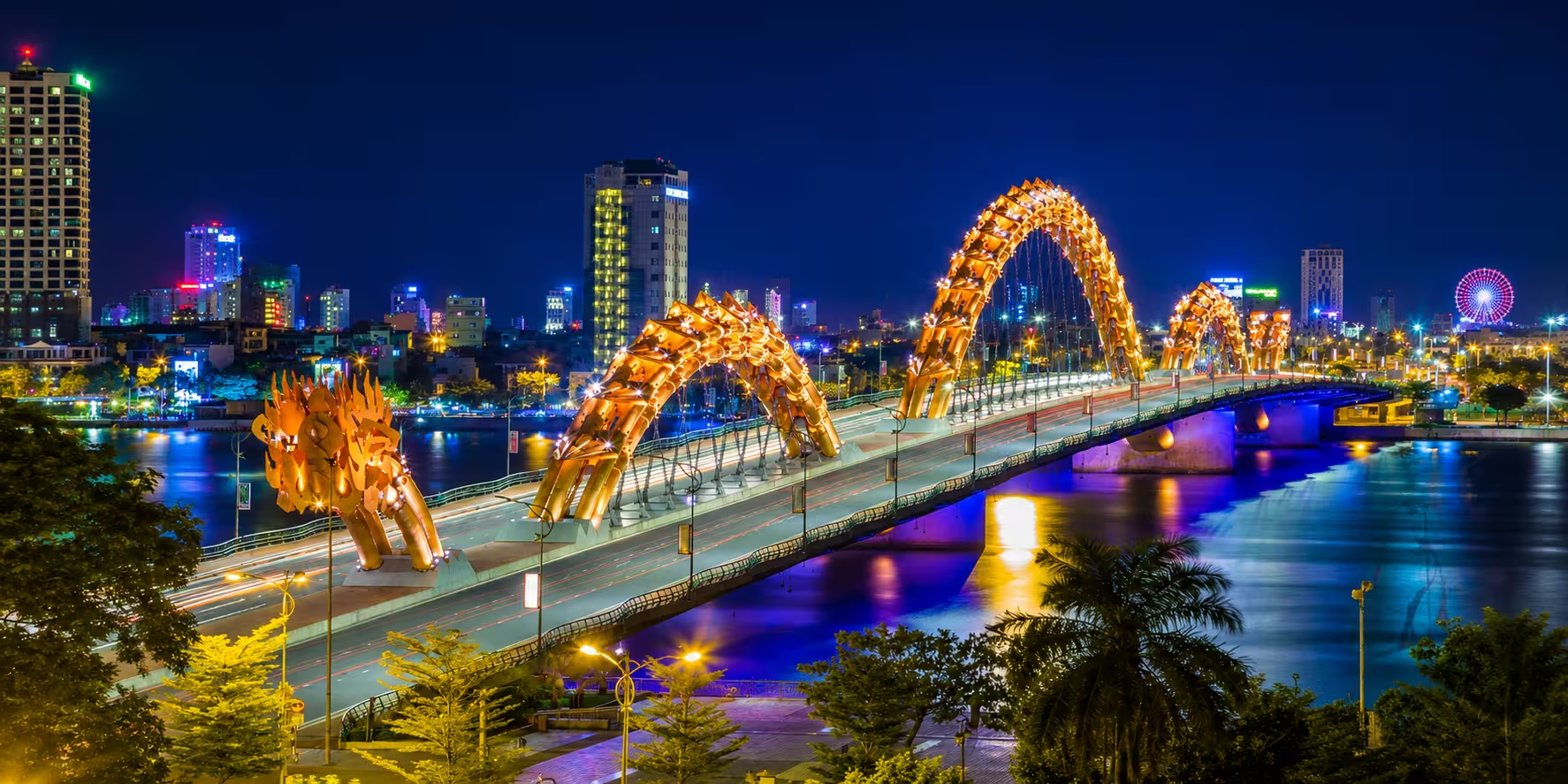
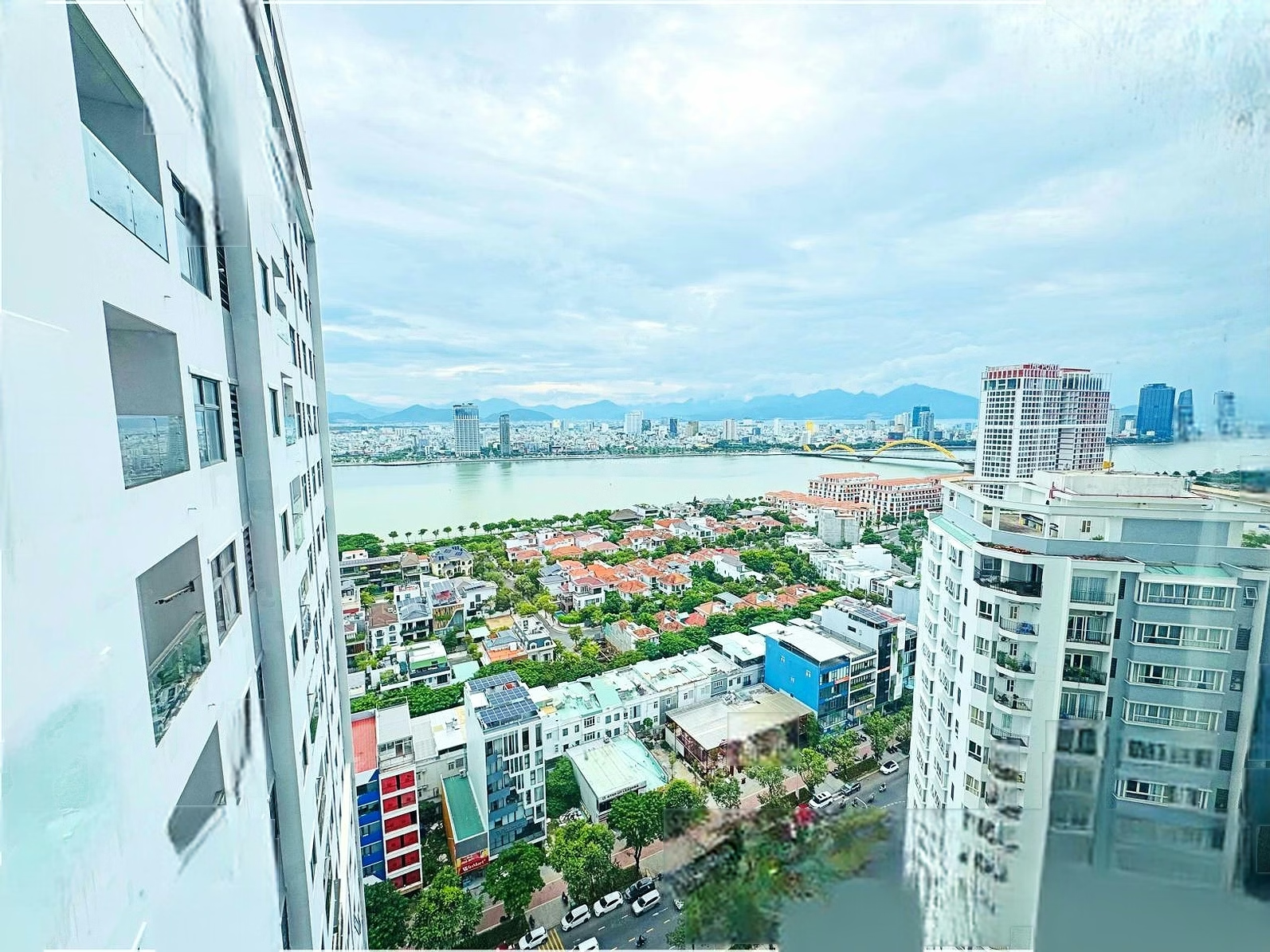
The accolade, first awarded by urban planning researchers comparing Vietnam's major metros, has stuck because it keeps proving true — wide, uncongested boulevards, a clean and well-organised urban core, 30 kilometres of beaches anchored by the famously soft sands of My Khe, and a skyline punctuated by the glowing, fire-breathing form of the Dragon Bridge rather than the dense high-rise canyons found in Hanoi or Ho Chi Minh City.
Just 30 kilometres down the coast sits Hoi An Ancient Town, a UNESCO World Heritage-listed riverside settlement of lantern-lit streets and centuries-old merchant houses, and as of mid-2025 that proximity has become more than a tourism footnote: Da Nang and Quang Nam province (which includes Hoi An) were officially merged into a single, centrally-governed city, also named Da Nang, making Hoi An part of the same administrative entity as the
beach city to its north. For residents, investors, and visitors, this means Da Nang's identity today spans considerably more ground than its city-proper population of 1.2 million suggests — a beach city, a UNESCO heritage town, mountain districts, and a fast-emerging financial and industrial zone, all now governed under one expanding urban brand.
This guide takes a thorough look at what makes Da Nang distinctive: its geography and climate, the 2025 merger and what it means for the region, its property market and investment case, its growing appeal to digital nomads and retirees, its infrastructure pipeline, and the practical factors anyone considering buying, renting, or relocating here should understand.
Geography and the 2025 Merger: A City Twice Its Former Size
For most of the past three decades, Da Nang has been known as a relatively compact coastal city — manageable, walkable in its central districts, and easy to navigate compared to the sprawl of Hanoi or Ho Chi Minh City.
That changed on 1 July 2025, when Quang Nam province was formally merged into Da Nang under Vietnam's nationwide administrative restructuring programme, creating a single centrally-governed city spanning roughly 11,800 square kilometres with a combined population of over 3 million people across 94 commune-level units.
The merger consolidated decades of close economic and cultural ties between the two regions — Quang Nam's manufacturing base, agricultural land, and World Heritage sites (Hoi An and the Cham ruins at My Son) are now part of the same governing structure as Da Nang's tourism core, port facilities, and emerging financial district.
For property buyers and investors, the practical significance of the merger is considerable.
Hoi An, long marketed as a separate "day trip" destination 30 kilometres from Da Nang, is now part of the same city, opening the door to more joined-up infrastructure planning, simplified administration for cross-border developments, and — many local analysts expect — a gradual convergence in property values along the corridor connecting the two historic centres.
The merger also gave the new, larger Da Nang access to a set of special economic mechanisms previously reserved for the original city, a factor that has accelerated several of the major investment projects discussed later in this guide.
Climate: Vietnam's Most Temperate Coastal City
Da Nang's climate is one of its most frequently cited advantages over Vietnam's other major cities. Sitting on the coastal plain between the cooler north and the consistently hot south, Da Nang experiences a milder, more moderate tropical climate than Ho Chi Minh City, without the dramatic cold spells of a Hanoi winter.
The city has a clear dry season from roughly February to August, with warm, sunny days well-suited to beach life, and a wetter season from September to January, when occasional storms and tropical depressions — a result of the city's central coastal position — can bring heavier rainfall and, in some years, typhoon activity.
Even at its coolest, in December and January, daytime temperatures rarely feel uncomfortably cold, and the city's protected position between the Son Tra peninsula and the Hai Van Pass helps shield it from some of the more extreme weather that can affect other parts of central Vietnam.
For residents weighing climate as a lifestyle factor, Da Nang is routinely described as offering the best of both worlds — warm enough for a genuine beach lifestyle most of the year, without the unrelenting heat and humidity of the deep south.
My Khe Beach, the Dragon Bridge, and a City Built Around Its Coastline
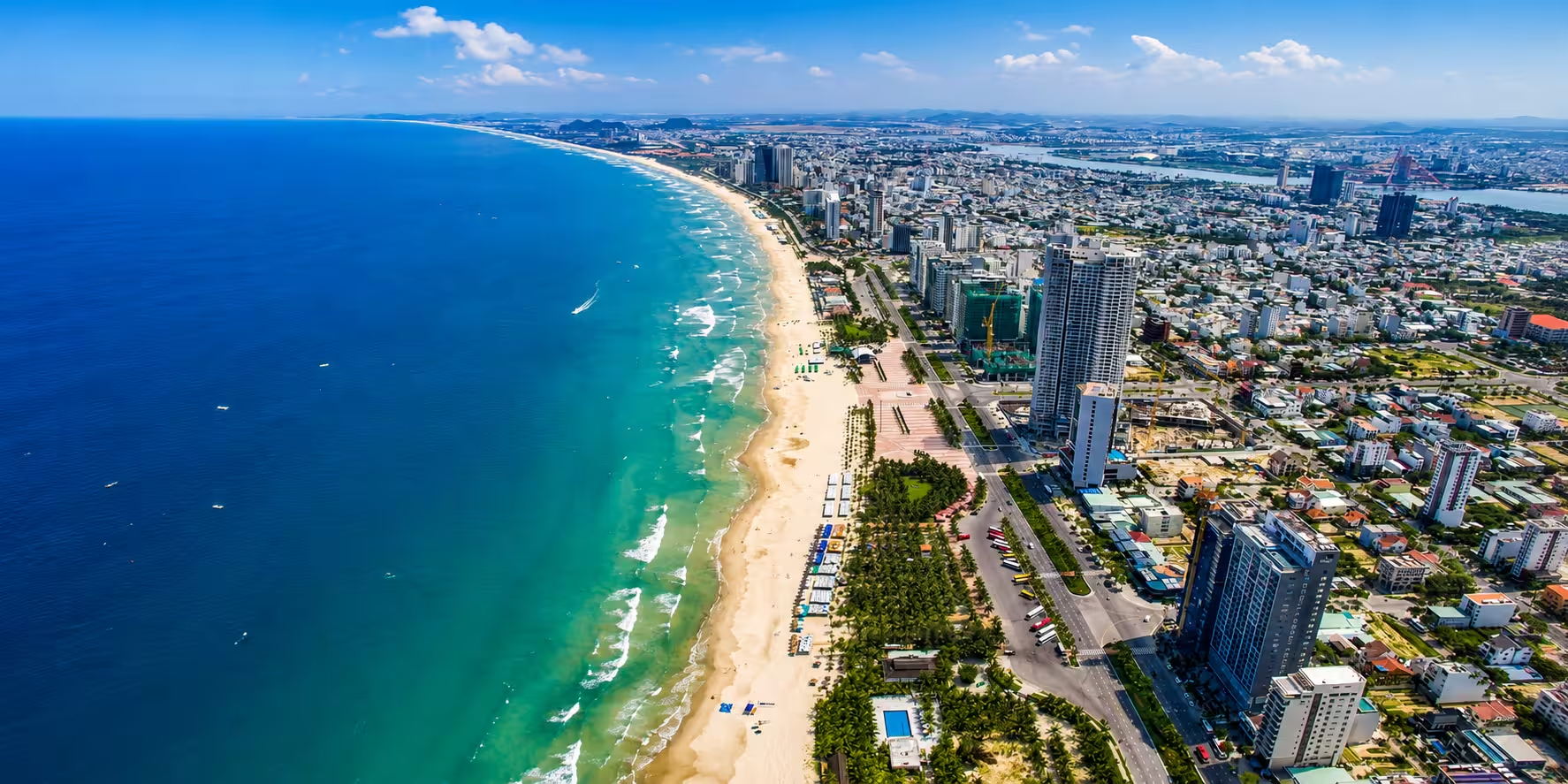
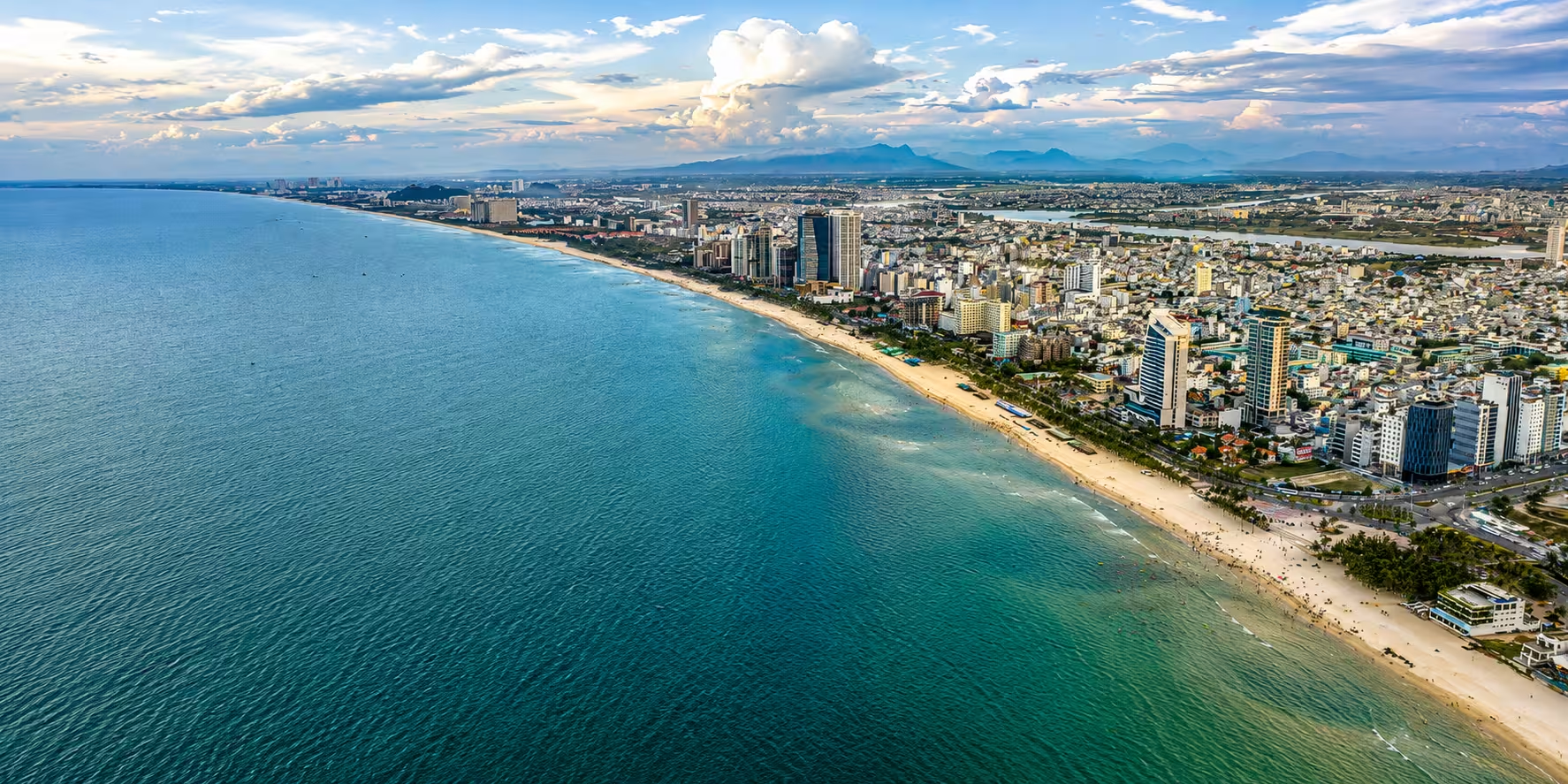
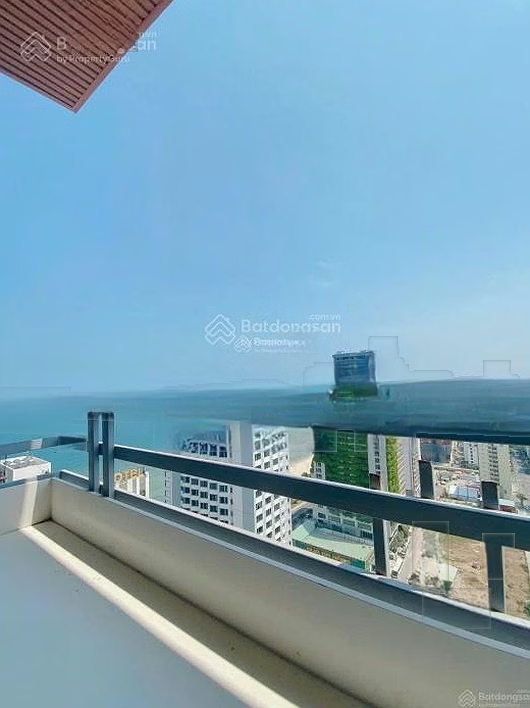
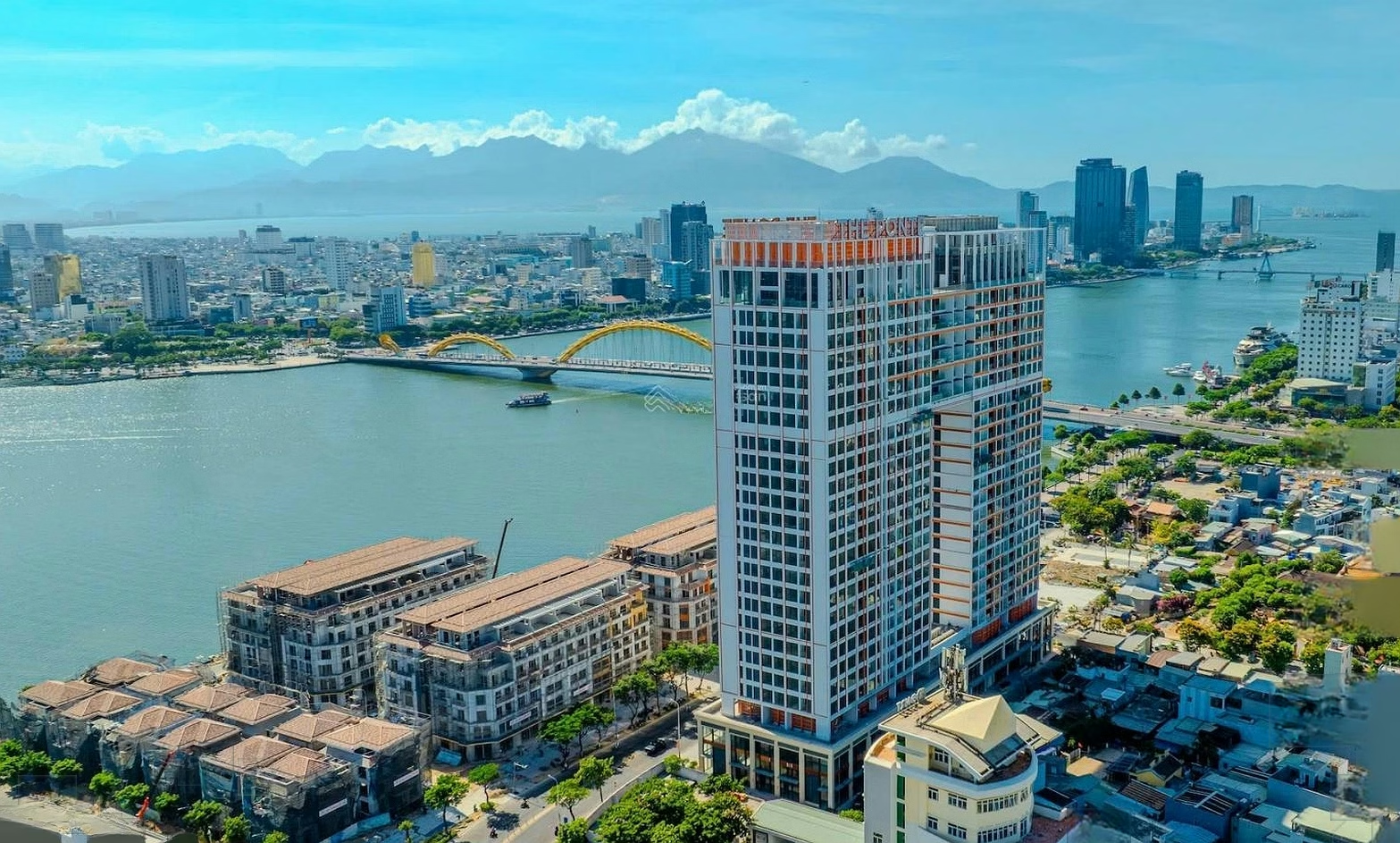
Da Nang's identity is inseparable from its beaches. My Khe Beach, once described by Forbes as one of the world's most beautiful beaches, stretches along the city's eastern edge with soft white sand and consistently calm, swimmable water — a rarity along Vietnam's central coast.
It anchors a 30-kilometre run of coastline that includes Non Nuoc Beach near the Marble Mountains, the quieter stretches near the Son Tra peninsula, and a steadily growing string of beachfront resorts and residential towers built specifically to capitalise on direct beach access.
The Dragon Bridge (Cau Rong), spanning the Han River and breathing fire and water on weekend evenings, has become the city's most photographed modern landmark and a symbol of Da Nang's transformation from a quiet provincial port into a tourism-driven metropolis.
Beyond the bridge, the city's natural landmarks — the limestone karsts of the Marble Mountains, the forested Son Tra peninsula (home to a population of rare red-shanked douc langurs), and the mountain resort of Ba Na Hills with its famous Golden Bridge — give Da Nang a level of natural scenic variety that few coastal cities anywhere in Southeast Asia can match within a 30-minute drive of the city centre.
Economic Profile: From Provincial Port to Financial and Industrial Hub
Da Nang's economy has historically rested on three pillars: tourism, light manufacturing, and a fast-growing information technology and software outsourcing sector that has earned the city comparisons to a "mini Singapore" among regional planners.
Tourism remains the most visible driver, with the city's hotel and resort sector — much of it concentrated along the My Khe and Non Nuoc beachfronts — drawing both domestic Vietnamese travellers and a steady international visitor base, particularly from South Korea, China, and increasingly Europe and North America.
What has changed dramatically over the past year is Da Nang's ambition to become something considerably more than a tourism and light-industry economy. In June 2025, the city launched its Free Trade Zone (FTZ), a roughly 1,881-hectare development spanning seven specialised zones in the Lien Chieu and Hoa Vang areas, designed as an integrated manufacturing, logistics, and innovation hub connected to the expanding Lien Chieu deep-water port.
Then, in January 2026, Vietnam officially inaugurated its International Financial Centre (IFC) in Da Nang — a flagship national project intended to position the city as a modern, internationally-oriented financial hub closely tied to the innovation economy, digital technology, and sustainable finance, with the government allocating prime land along Vo Van Kiet Street for a complex combining financial services, commercial space, entertainment,
and luxury residences. By March 2026, the city had already approved further investment packages worth over 15,000 billion VND across multiple FTZ zones, and officials have set a target of roughly 11% economic growth for the city in 2026 alone.
Taken together, these developments mark what many regional economists describe as a structural shift rather than a cyclical upswing for Da Nang — a transition from a tourism-and-light-manufacturing economy into a diversified hub spanning logistics, advanced manufacturing, fintech, and international finance.
For property investors, this matters because it suggests Da Nang's medium-term demand drivers are likely to broaden considerably beyond tourism and retiree relocation, adding a layer of corporate, financial-sector, and skilled-worker housing demand that has historically been more associated with Hanoi and Ho Chi Minh City than with Vietnam's coastal cities.
Districts: From the Beachfront to the Mountains to the New Industrial Zones
Da Nang's urban core is organised into a handful of compact, easily distinguishable districts, each with a different character and price point.
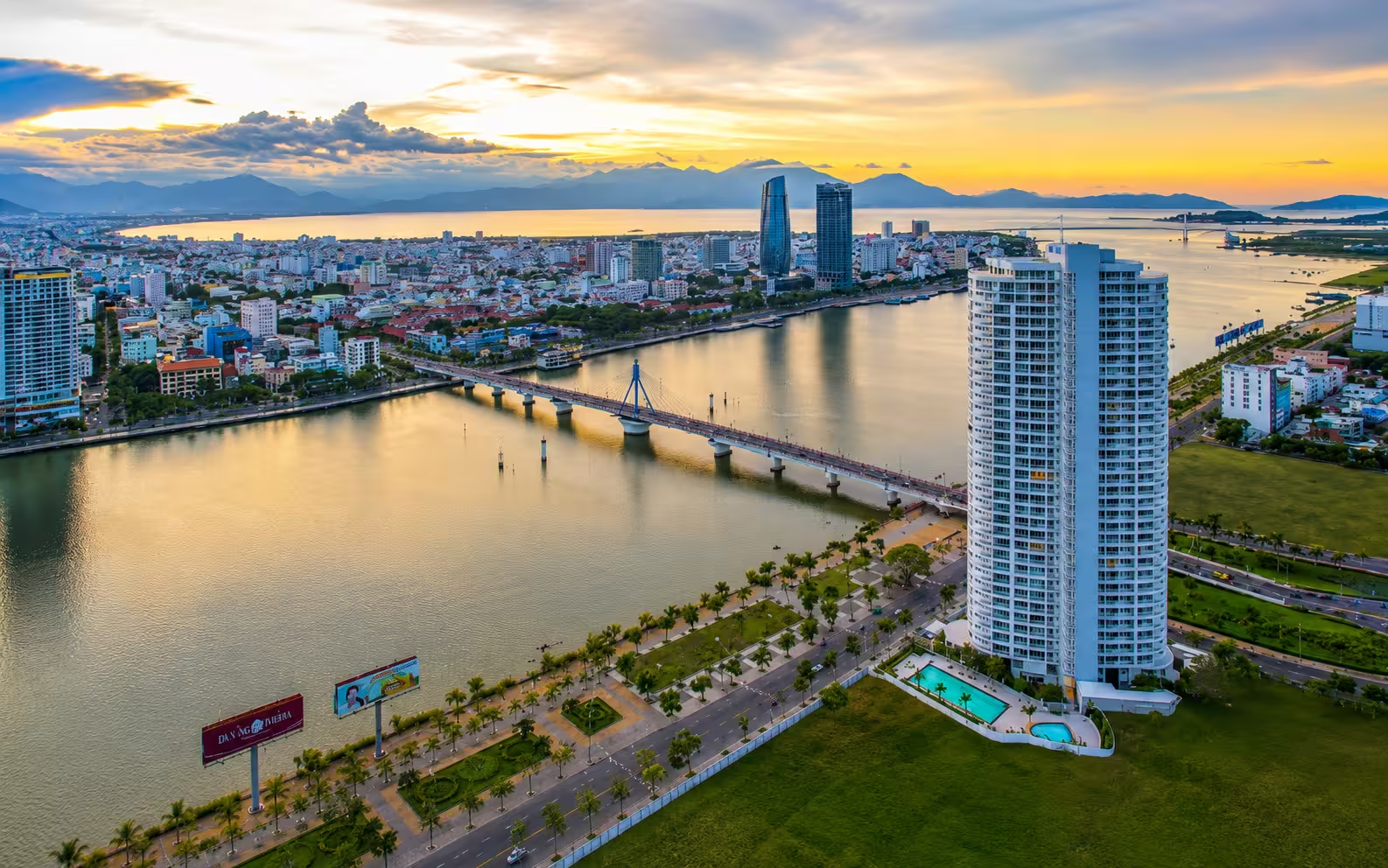
Hai Chau, the city's historic and administrative centre, sits along the western bank of the Han River and is home to the city's main shopping streets, government buildings, and a dense concentration of mid-rise apartments and shophouses — popular with long-term local residents and increasingly with expats who prefer urban convenience over beachfront living.
Son Tra, on the eastern side of the Han River, contains the My Khe beachfront and the wooded Son Tra peninsula, and has become the city's premier address for beachfront condominiums, branded resort residences, and short-term rental investment properties.
This is the district most associated with Da Nang's tourism-driven real estate boom, and where international and domestic developers have concentrated the bulk of their luxury beachfront projects over the past decade.
Ngu Hanh Son, just south of Son Tra, includes Non Nuoc Beach and the Marble Mountains, and has developed into another significant beachfront resort and residential corridor, benefiting from slightly more land availability and lower density than the most built-up sections of My Khe.
Thanh Khe and Cam Le offer more affordable, predominantly local residential markets close to the city centre and Da Nang International Airport, appealing to middle-income local buyers and investors seeking lower entry points with steady owner-occupier demand.
Lien Chieu, historically a quieter industrial district at the city's northern edge, has become one of the most closely watched areas in the entire region following the launch of the Free Trade Zone and the ongoing expansion of Lien Chieu Port — a deep-water port project receiving a budgeted 23,335 billion VND for new berths, alongside a new six-lane coastal road connecting the port area, scheduled to open in the first quarter of 2026.
Investors positioning ahead of this build-out are watching Lien Chieu closely as a longer-term industrial and logistics-driven growth story.
Hoa Vang, the city's largest and most rural district by land area, hosts part of the Free Trade Zone and is expected to see substantial new industrial, logistics, and supporting residential development over the coming decade as the FTZ matures.
Further south, the corridor connecting central Da Nang to Hoi An — now within the same administrative city following the 2025 merger — includes a growing strip of mid-to-high-end resort and residential development along the coast, benefiting from proximity to both Da Nang's airport and amenities and Hoi An's UNESCO-listed Ancient Town and riverside charm.
The Property Market: Beachfront, Branded, and Increasingly Diverse
Da Nang's property market has historically been shaped more by tourism and lifestyle demand than by the corporate and institutional drivers that dominate Hanoi and Ho Chi Minh City, though that balance is shifting as the FTZ and IFC projects mature.
Average prices currently sit in the 35–80 million VND per square metre range, noticeably more accessible than either of Vietnam's two largest cities, reflecting both Da Nang's smaller population base and a market still earlier in its institutional development.
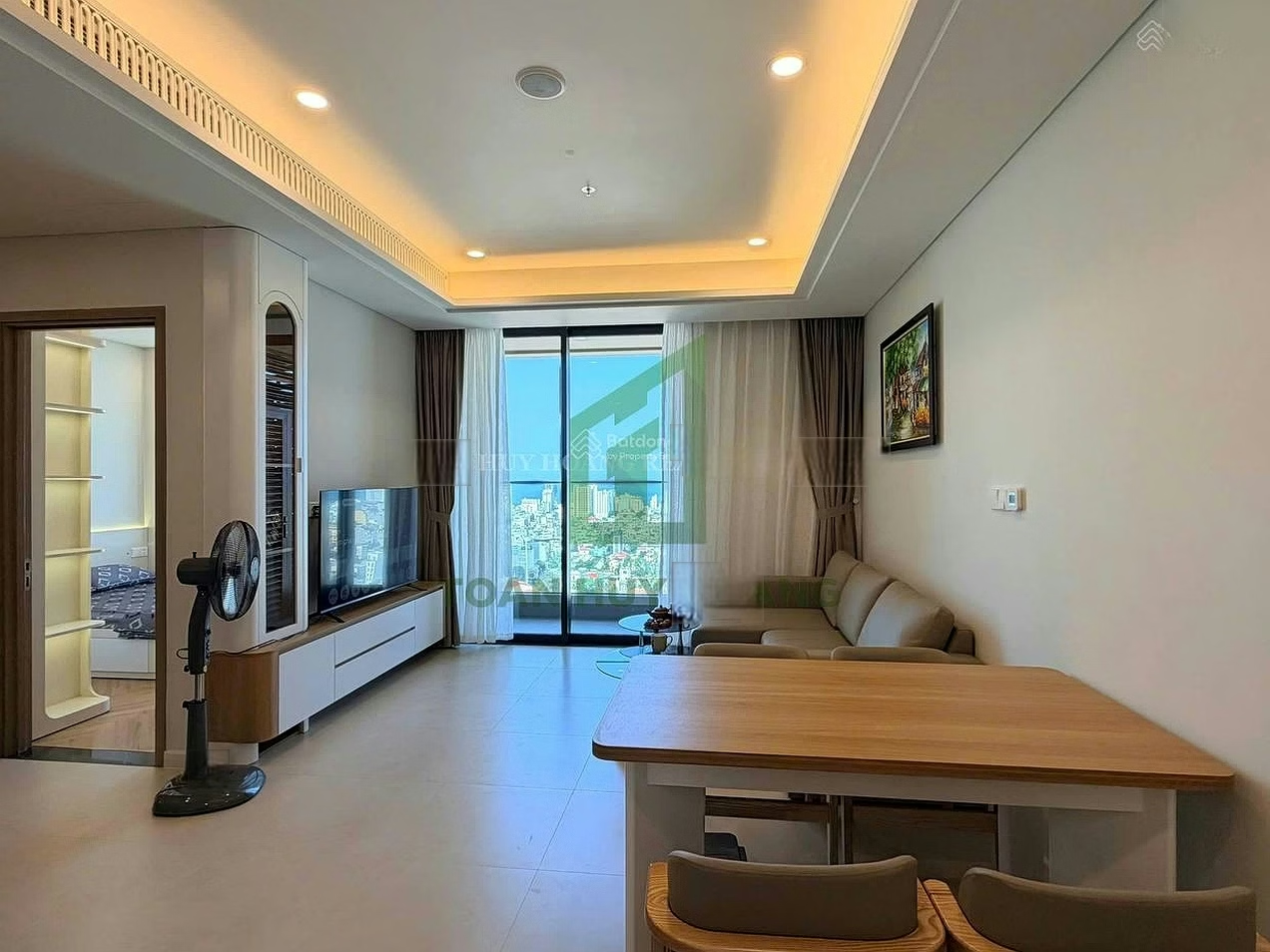
The dominant product type remains the beachfront or near-beachfront condominium, frequently developed as part of branded resort complexes offering hotel-style amenities, rental management programmes, and a mix of short-term holiday-let and long-term rental options.
This segment has historically attracted a global mix of buyers: domestic Vietnamese investors seeking a beach holiday home with rental income potential, overseas Vietnamese returning capital to a familiar market, and a smaller but steady stream of foreign buyers — predominantly from South Korea, other parts of Asia, and increasingly Europe — drawn by the combination of beach lifestyle and comparatively low entry prices versus equivalent
coastal property elsewhere in the region.
As with the rest of Vietnam, foreign individuals can generally purchase apartments in eligible developments under a leasehold-style structure typically running 50 years and renewable, subject to a foreign-ownership quota tracked per building. Landed property and villas carry tighter restrictions for foreign buyers.
Because Da Nang's rapid growth — and now its merger and new economic zones — has prompted ongoing adjustments to local planning and project approvals, anyone considering a purchase should verify a specific project's foreign-ownership eligibility and legal standing with a licensed Vietnamese property lawyer before signing any agreement; this guide is intended as general orientation rather than legal or financial advice.
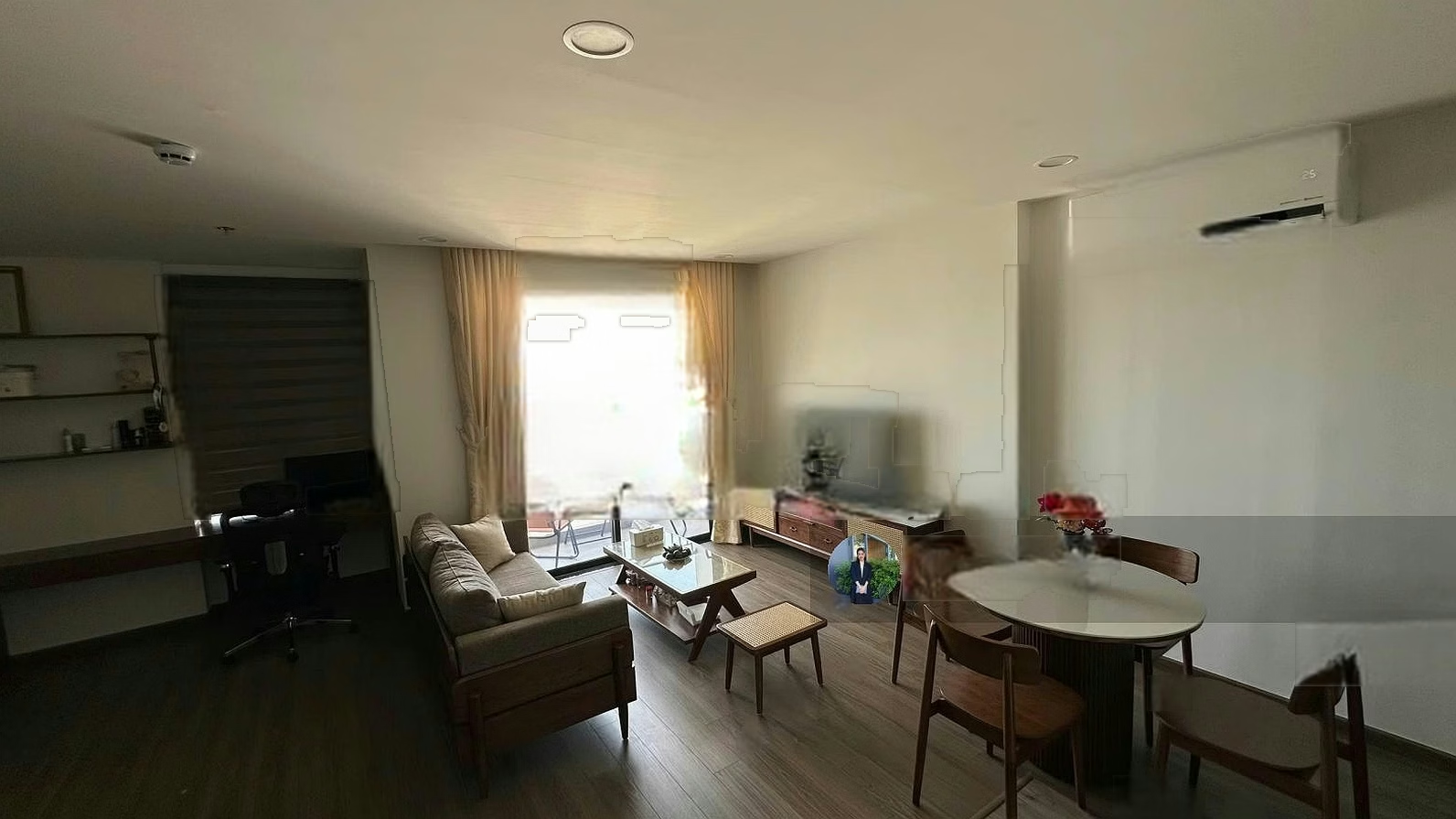
Beyond the beachfront segment, the city's central districts offer a more conventional residential apartment market serving local end-users and long-term tenants, generally at lower price points than the resort-branded coastal product, while Lien Chieu and Hoa Vang are increasingly drawing land and industrial-property investors positioning ahead of the FTZ's full build-out.
Rental Yields and the Tenant Mix: Tourism Meets Long-Term Demand
Average rental yields in Da Nang run at roughly 5–8%, comfortably ahead of both Hanoi and Ho Chi Minh City on average — a reflection of the city's lower entry prices combined with strong tourism-driven short-term rental demand in the beachfront segment.
Short-term and holiday-let income, particularly for well-managed units in branded beachfront developments, has historically been the primary yield driver, supported by Da Nang's status as one of Vietnam's top domestic and international tourism destinations.
That said, the tenant base has been diversifying. The growth of the city's digital nomad and remote-work community, a steadily increasing retiree population, and — more recently — the early stages of corporate and financial-sector relocation tied to the FTZ and IFC projects have all added a longer-term rental demand layer that didn't exist to the same degree a decade ago.
This diversification matters for investors because it reduces the market's historical dependence on tourism cycles; a beachfront unit that might once have relied entirely on holiday bookings can increasingly draw from a broader pool of monthly and annual tenants, smoothing income across seasons and across years when international travel patterns fluctuate.
Da Nang as a Digital Nomad and Retiree Destination
Da Nang's reputation as a haven for digital nomads and retirees seeking a relaxed coastal lifestyle has grown substantially over the past several years, and the reasons are not hard to identify.
The city offers a genuine beach lifestyle with reliable infrastructure, fast and widely available internet, a lower cost of living than Hanoi or Ho Chi Minh City, and a level of cleanliness, order, and walkability that distinguishes it from Vietnam's larger, more chaotic metros.
A well-established community of coworking spaces, beachfront cafés, and long-stay accommodation has grown up specifically to serve this demographic, particularly concentrated around My Khe Beach and the An Thuong area, which has developed something of a reputation as the city's de facto expat and nomad social hub.
Retirees, meanwhile, are drawn by many of the same factors — climate, beach access, lower living costs — combined with a slower pace of life and growing access to private healthcare facilities.
Da Nang has not historically matched Ho Chi Minh City or Hanoi for the depth of its international school and hospital infrastructure, but both sectors have expanded steadily as the city's foreign and returning-Vietnamese population has grown, and further investment in social and healthcare infrastructure is an explicit part of the city's current development planning tied to the FTZ and IFC build-out.
Connectivity and Infrastructure
Da Nang International Airport, located just a few kilometres from the city centre — making it one of the most centrally located airports in the country — offers extensive domestic connections across Vietnam alongside a growing roster of direct international routes to South Korea, China, Japan, and other parts of Asia, with seasonal and chartered routes to a wider set of destinations during peak tourism periods.
Its proximity to both the My Khe beachfront and the central business district is a meaningful convenience that few other beach destinations in the region can match.
Beyond the airport, Da Nang's infrastructure pipeline has accelerated sharply alongside its new economic ambitions. The expansion of Lien Chieu Port into a major deep-water container and cargo facility is intended to relieve pressure on the city's older Tien Sa port and position Da Nang as a key logistics node along the East–West Economic Corridor connecting Vietnam to Laos, Thailand, and Myanmar.
A new six-lane, roughly 3-kilometre coastal road serving the port and FTZ area is scheduled to open in the first quarter of 2026, and further road and rail connectivity improvements linking the newly expanded city — including the corridor down to Hoi An and the former Quang Nam towns — are an active part of the post-merger planning agenda.
Education and Healthcare
Da Nang's international school sector, while smaller than Ho Chi Minh City's or Hanoi's, has grown steadily to serve the city's expanding expat, returning-Vietnamese, and increasingly corporate-relocation population, with a handful of established international and bilingual schools now operating across the city.
As the IFC and FTZ projects bring more skilled professionals and their families to the city over the coming years, further investment in international education is widely expected, mirroring the pattern seen in Ho Chi Minh City's District 7 and Thu Duc City as those areas developed their own expat-oriented school infrastructure.
On healthcare, the city has a growing private hospital and clinic sector alongside its public system, with continued investment in medical infrastructure forming part of the broader social-infrastructure commitments tied to Da Nang's new financial centre status.
For long-term residents and retirees, healthcare access remains an area worth researching project-by-project and neighbourhood-by-neighbourhood, as quality and availability can vary more than in Vietnam's largest two cities.
Food, Culture, and Daily Life
Central Vietnamese cuisine has its own distinct character, and Da Nang sits at its heart.
Mi Quang (turmeric-yellow turmeric noodle soup), banh xeo (savoury crepes), and an outstanding seafood scene drawing on the city's fishing fleet and proximity to the South China Sea all feature prominently in daily life, alongside an increasingly sophisticated café, craft beer, and beachfront dining culture that has grown up specifically to serve both tourists and the city's expanding long-term foreign resident base.
Just down the coast, Hoi An's culinary reputation — built on dishes like cao lau and white rose dumplings, along with its lantern-lit night market atmosphere — adds further depth to the food culture now contained within Da Nang's expanded city boundaries.
Daily life in Da Nang moves at a noticeably slower, more relaxed pace than either Hanoi or Ho Chi Minh City.
Mornings often begin with a swim or a walk along My Khe Beach; weekends are built around the coastline, the surrounding mountains, or day trips to Hoi An, Hue, or Ba Na Hills; and the city's broad, well-maintained streets and relatively light traffic make both driving and walking considerably less stressful than in Vietnam's two largest metros.
This pace is frequently cited by residents — both Vietnamese and foreign — as Da Nang's single biggest lifestyle advantage.
Future Development and Growth Drivers
Da Nang's growth story over the next decade is likely to be shaped by several converging forces.
The Free Trade Zone and International Financial Centre represent the most significant structural shift in the city's economic profile in a generation, with the potential to diversify Da Nang's economy well beyond tourism and light manufacturing into logistics, advanced manufacturing, fintech, and international finance — sectors that typically bring higher-income, longer-staying residents and correspondingly stronger demand for quality housing.
The expansion of Lien Chieu Port and the city's role in the East–West Economic Corridor add a further industrial and logistics growth layer. And the 2025 merger with Quang Nam — bringing Hoi An, the Cham ruins at My Son, and a much larger land and population base under one administrative umbrella — gives the city considerably more room to plan, zone, and develop in a coordinated way than the old, more compact Da Nang ever could.
Tourism, meanwhile, remains a durable foundation rather than a fading one. My Khe Beach, Ba Na Hills, the Marble Mountains, and now a more seamlessly connected Hoi An give Da Nang one of the strongest and most diverse tourism product offerings of any city in Vietnam, supporting continued hotel, resort, and short-term rental demand even as the city's economic base broadens.
Risks and Considerations for Investors
Da Nang's risk profile differs somewhat from Vietnam's two largest cities. Its property market has historically been more exposed to tourism cycles than Hanoi's or Ho Chi Minh City's, meaning beachfront and resort-branded units can see income fluctuate more with international travel patterns, regional currency movements, and broader tourism trends than a typical long-term residential lease in a major city centre.
The city's central coastal position also means periodic exposure to tropical storms and typhoons during the wetter months, a factor worth understanding at the building and insurance level rather than assuming applies uniformly to every project.
The scale of recent change — the Quang Nam merger, the new FTZ, the IFC launch — is also worth approaching with measured expectations.
These are genuinely significant developments, but large infrastructure and economic-zone projects in Vietnam, as elsewhere, frequently take longer to reach full maturity than initial announcements suggest, and the gap between an ambitious masterplan and a fully operational financial district or industrial zone can span years.
As with any market moving through rapid structural change, investors should distinguish carefully between projects and locations with genuine infrastructure-backed fundamentals and those priced primarily on anticipation of future announcements. None of this constitutes financial or legal advice; it is intended only as a starting point for due diligence that should be carried out with qualified local professionals before any purchase.
How Da Nang Compares to Vietnam's Other Major Markets
Set against Hanoi and Ho Chi Minh City, Da Nang's case rests less on scale and more on lifestyle, yield, and emerging diversification. Average rental yields of 5–8% comfortably exceed what's typical in either of Vietnam's two largest cities, and entry prices remain considerably lower, making Da Nang an attractive option for investors prioritising income and accessibility over the deepest possible market liquidity.
Against the other coastal markets, particularly Nha Trang and Phu Quoc, Da Nang differentiates itself through its combination of beach lifestyle and genuine economic substance — the FTZ, IFC, and expanding port infrastructure give it an industrial and financial growth story that most pure tourism destinations lack, while its "most liveable city" reputation and now-expanded administrative reach into Hoi An give it a breadth of lifestyle and
cultural appeal that few coastal cities anywhere in the region can match.
What Buying in Da Nang Typically Involves
For anyone new to the market, it helps to understand the broad shape of a purchase before getting into project-specific detail.
Because so much of Da Nang's investment-grade stock sits within branded beachfront or resort-style developments, buyers typically need to look closely not just at the unit itself but at the rental management arrangement attached to it — many beachfront condominiums are sold with an optional or mandatory rental pool or management contract, which determines how income is split, how maintenance and furnishing costs are handled, and how much
flexibility the owner retains to use the unit personally. These terms vary significantly between developers and can have a meaningful impact on real-world net yield, so they're worth reviewing as carefully as the headline price per square metre.
As elsewhere in Vietnam, buyers should confirm a project's foreign-ownership eligibility and remaining quota before signing a reservation agreement, and should expect a staged payment schedule tied to construction milestones for off-plan purchases.
Given the pace of change in Da Nang specifically — the 2025 merger, the new FTZ, and the IFC launch have all prompted updates to local planning and investment frameworks — engaging a licensed Vietnamese property lawyer with current, Da Nang-specific experience is particularly worthwhile, both to confirm a project's legal standing and to clarify how any newly introduced economic-zone incentives might apply to a given purchase.
As with the rest of this guide, none of this is intended as legal or financial advice, only as a starting point for the due diligence any serious buyer should undertake with qualified local professionals.
Who Da Nang Suits Best
Da Nang is best suited to investors and residents drawn to a genuine beach lifestyle combined with comparatively low entry costs, strong average rental yields, and a city actively in the process of broadening its economic base beyond tourism.
It is a natural fit for digital nomads and remote workers seeking reliable infrastructure in a relaxed coastal setting, retirees prioritising climate and lifestyle over big-city amenities, and investors comfortable with a market still earlier in its institutional development but increasingly underpinned by serious national-level economic projects.
Where Hanoi offers cultural depth and Ho Chi Minh City offers scale and liquidity, Da Nang's pitch is increasingly about having it both ways — a relaxed, beach-fronted way of life, layered on top of a city that, almost a decade after first being named Vietnam's most liveable, is now also positioning itself as one of its most ambitious.
Da Nang at a Glance
Metric
Detail
Population
1.2 million (city proper); 3M+ across the newly merged Da Nang–Quang Nam administrative area
International Airport
Da Nang Intl
Avg. Price/m²
35–80M VND
Rental Yield
5–8% avg
Beach Length
30 km of beaches
Distance to Hoi An
~30 km (now within the same administrative city)
Key Developments
Vietnam International Financial Centre (launched Jan 2026); Da Nang Free Trade Zone; Lien Chieu Port expansion