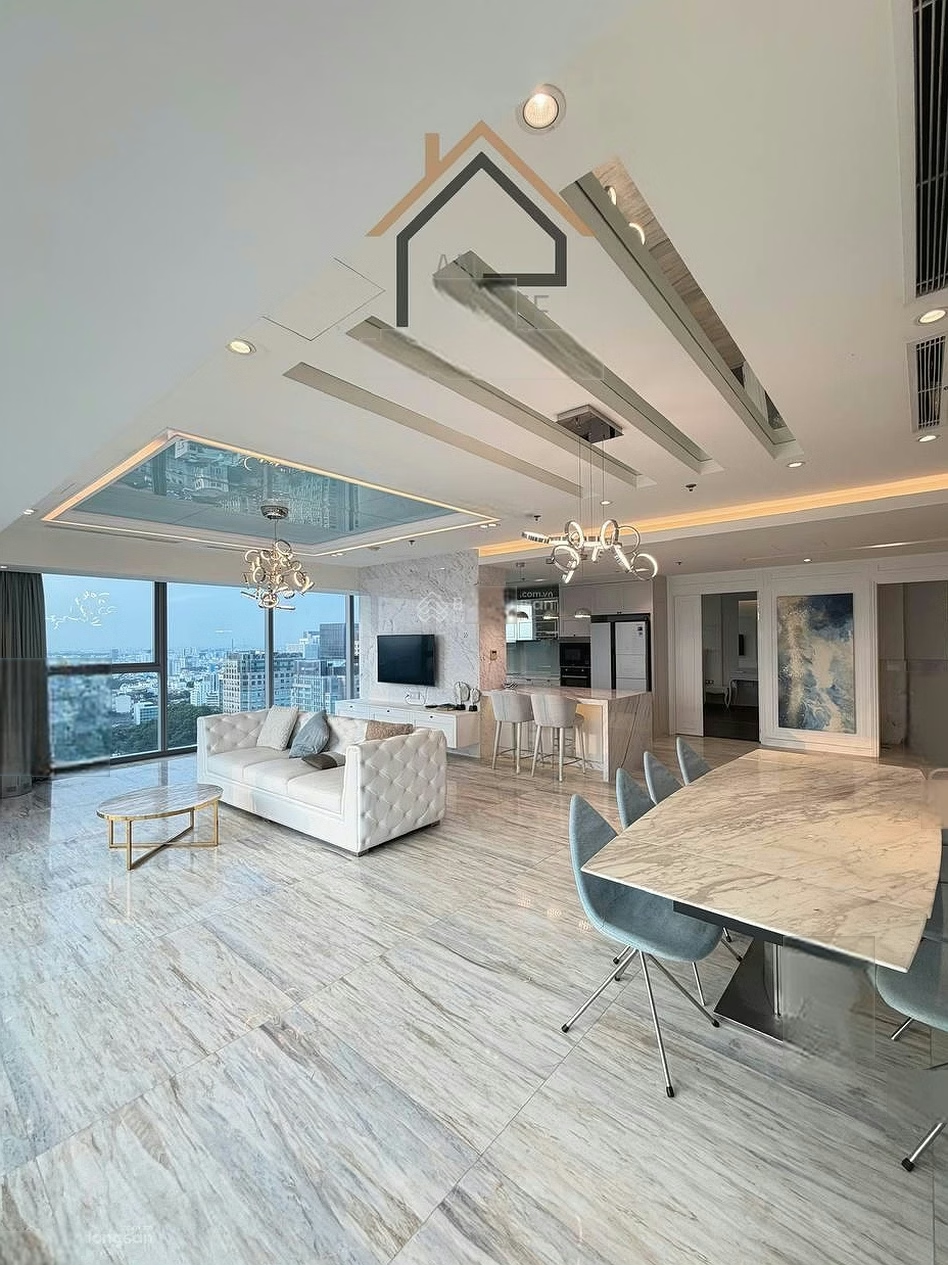
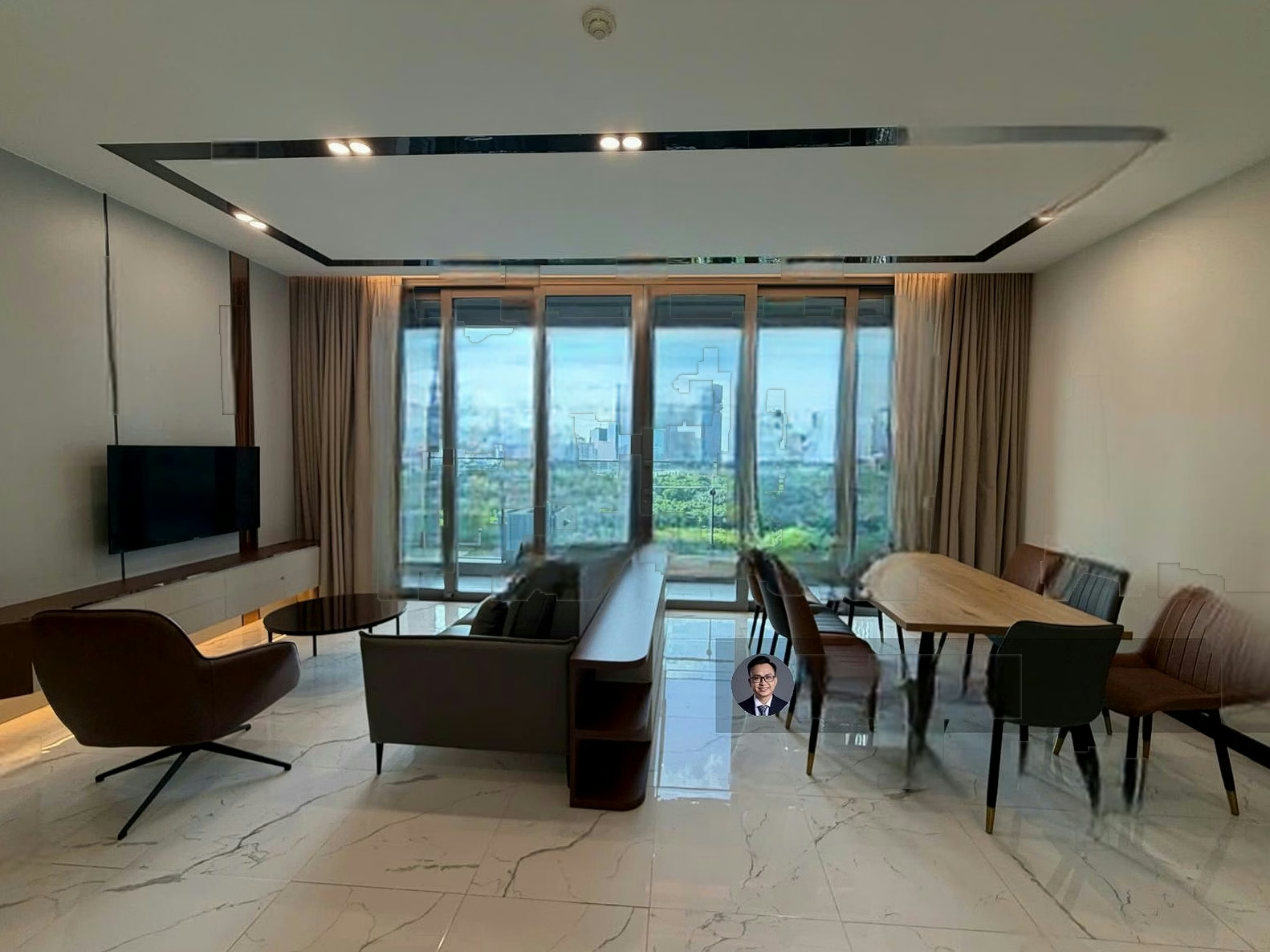
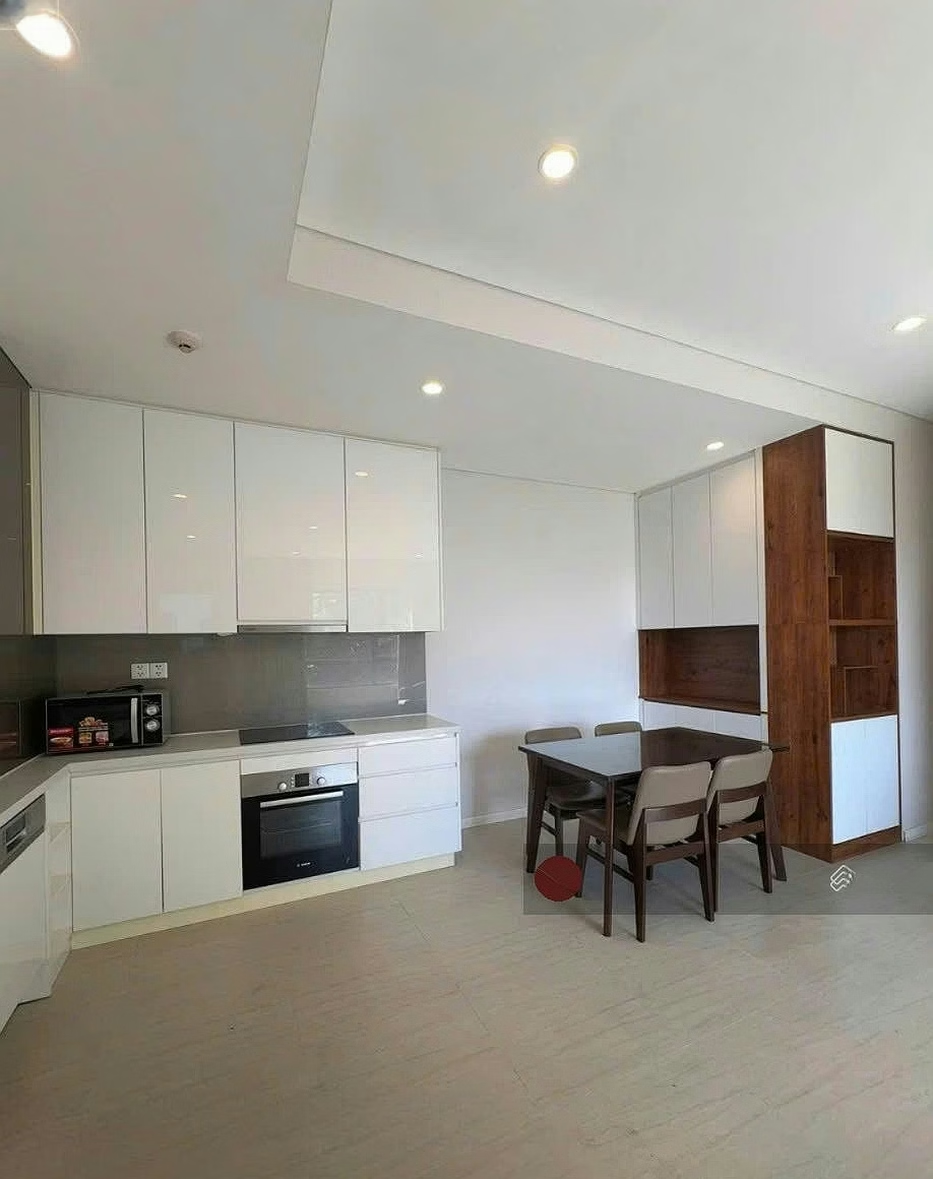
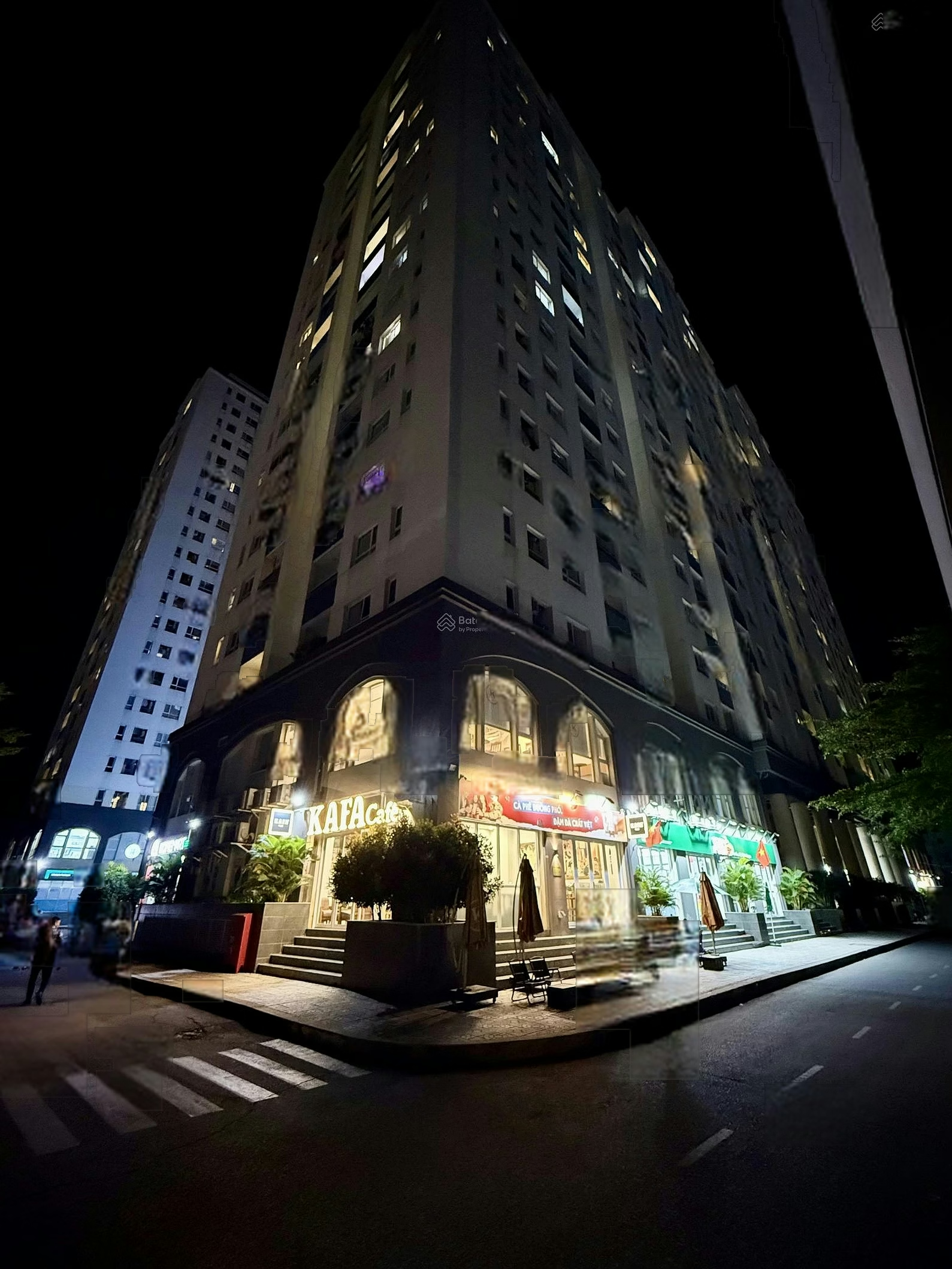
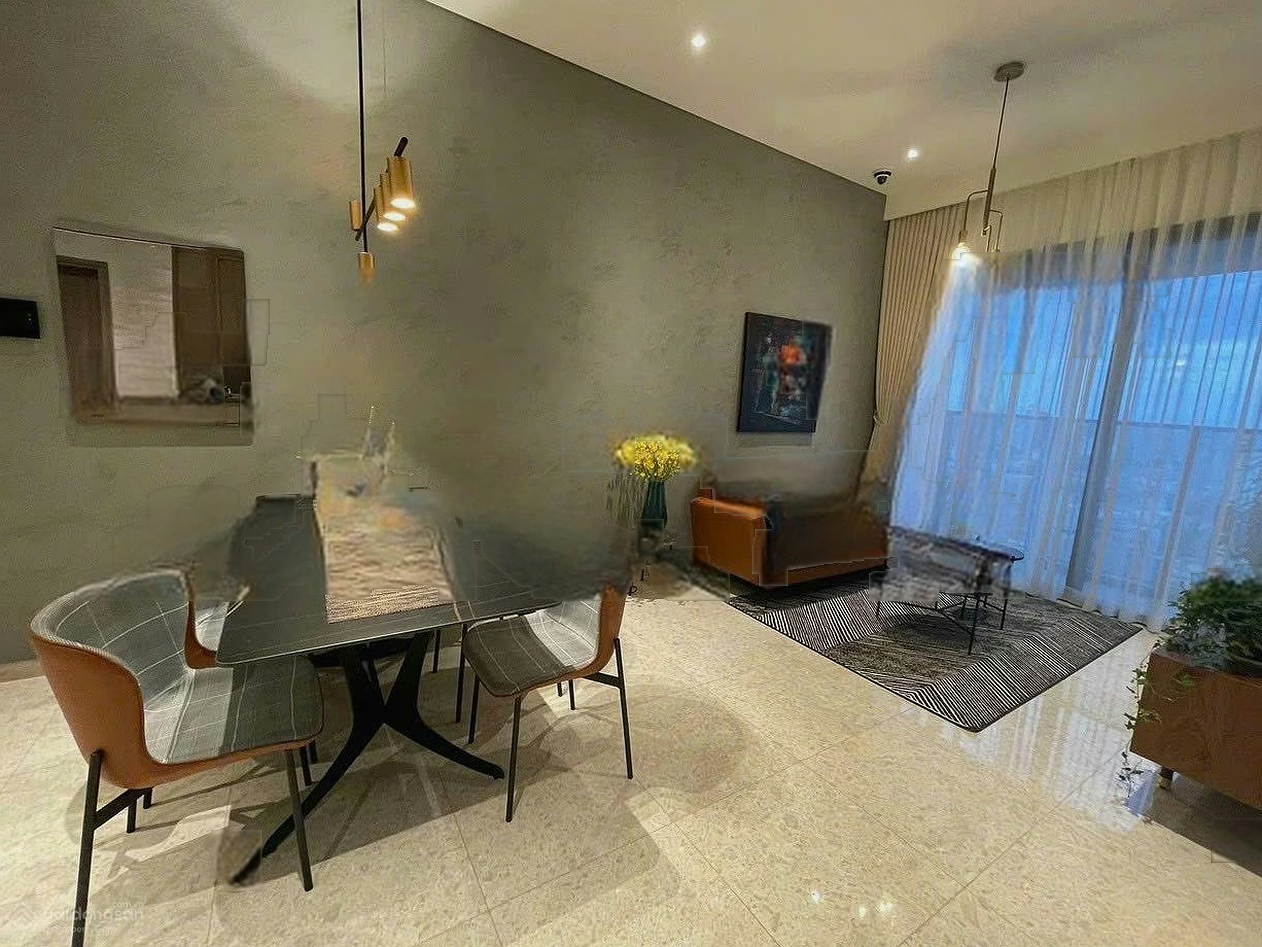
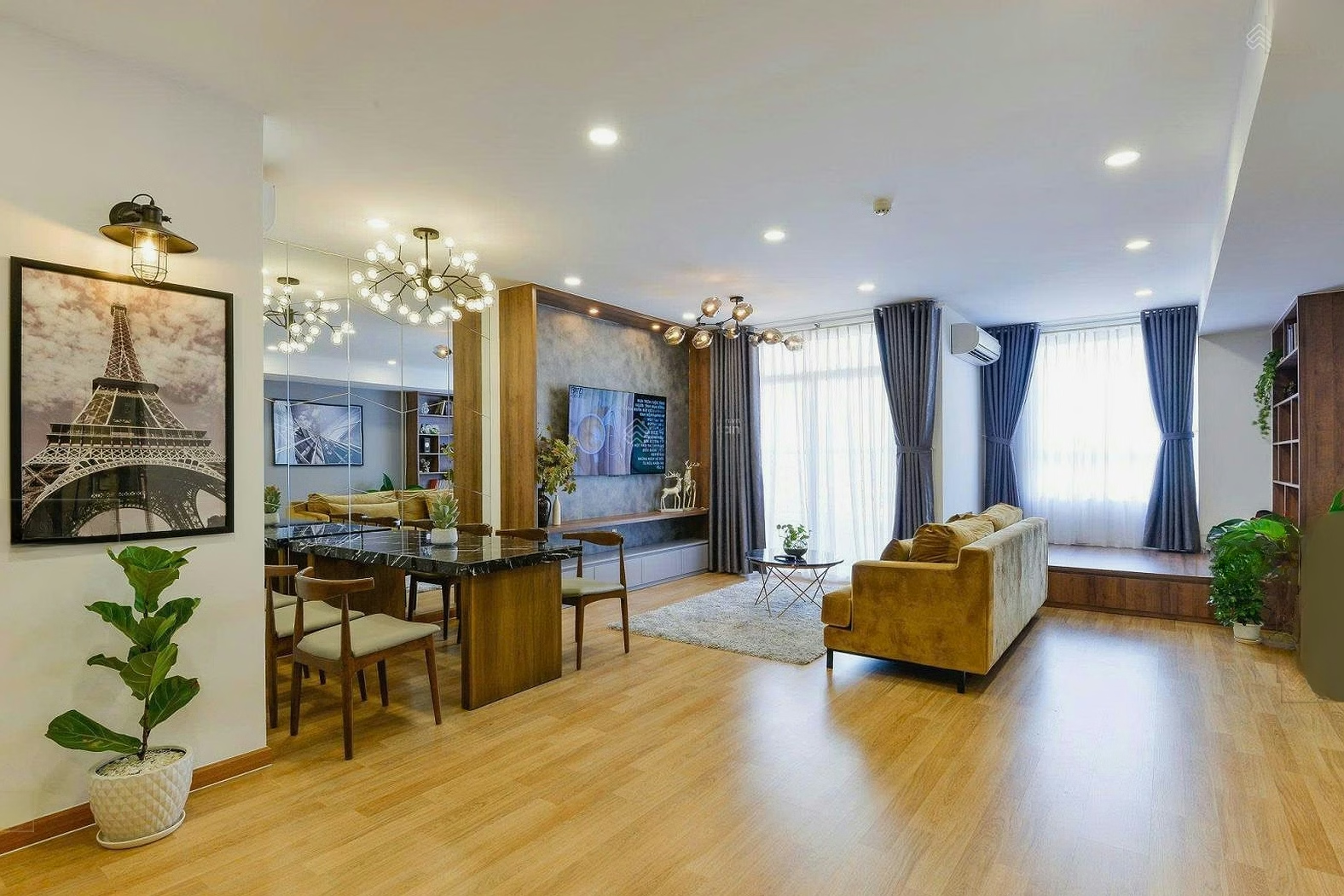
Ho Chi Minh City (Saigon) is Vietnam's commercial capital and most dynamic real estate market. With a population of over 9 million and a booming economy, it offers a wide spectrum of properties — from luxury high-rises in District 1 and District 2 (Thu Duc City) to affordable apartments in developing outer districts. The city draws both local and international investors with strong rental demand, improving infrastructure, and continued development.
Ho Chi Minh City: A Complete Guide to Vietnam's Commercial Capital and Its Property Market
Introduction: The City That Never Slows Down
Ho Chi Minh City — known to nearly everyone who lives there simply as Saigon — is Vietnam's commercial capital and unquestionably its most dynamic real estate market.
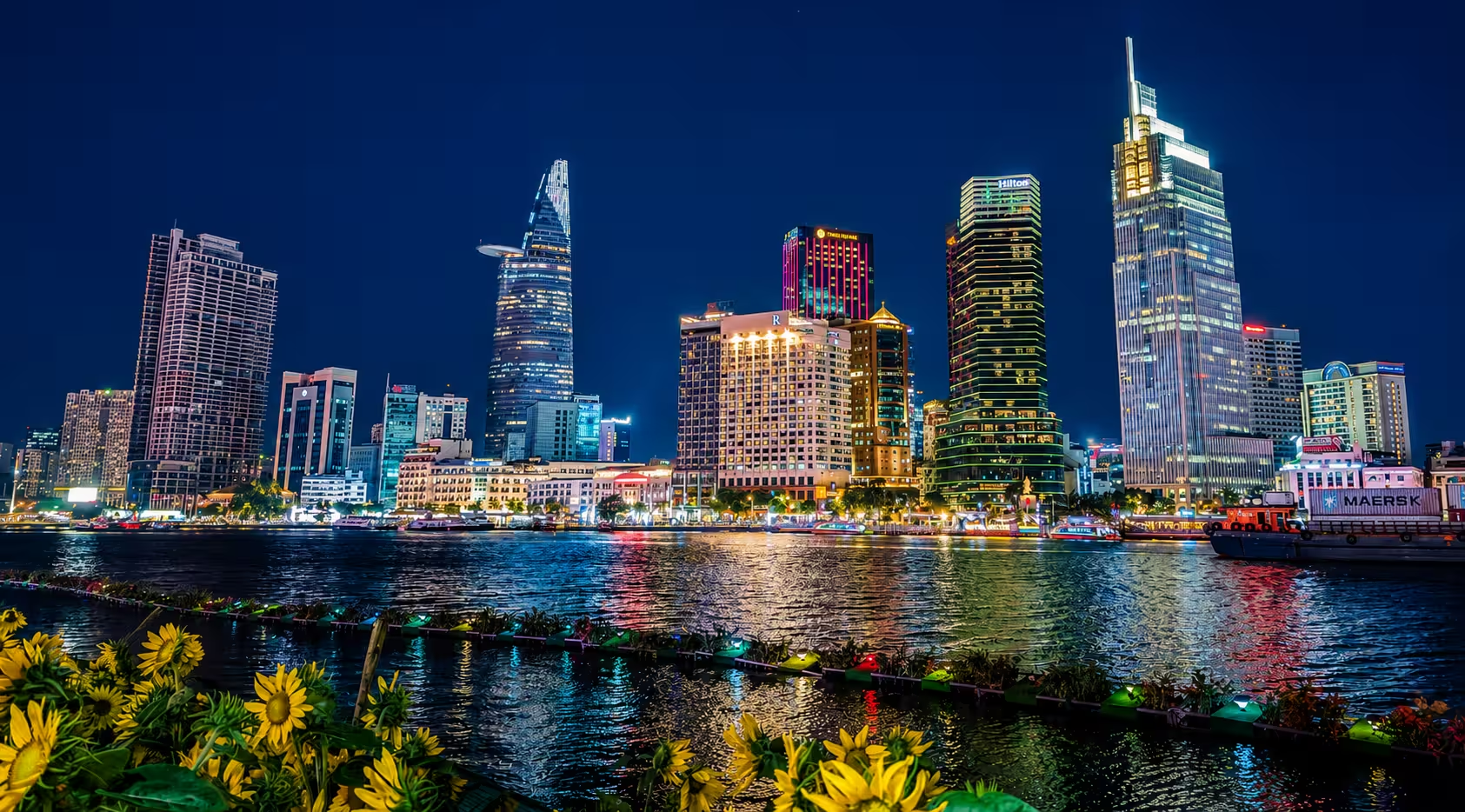
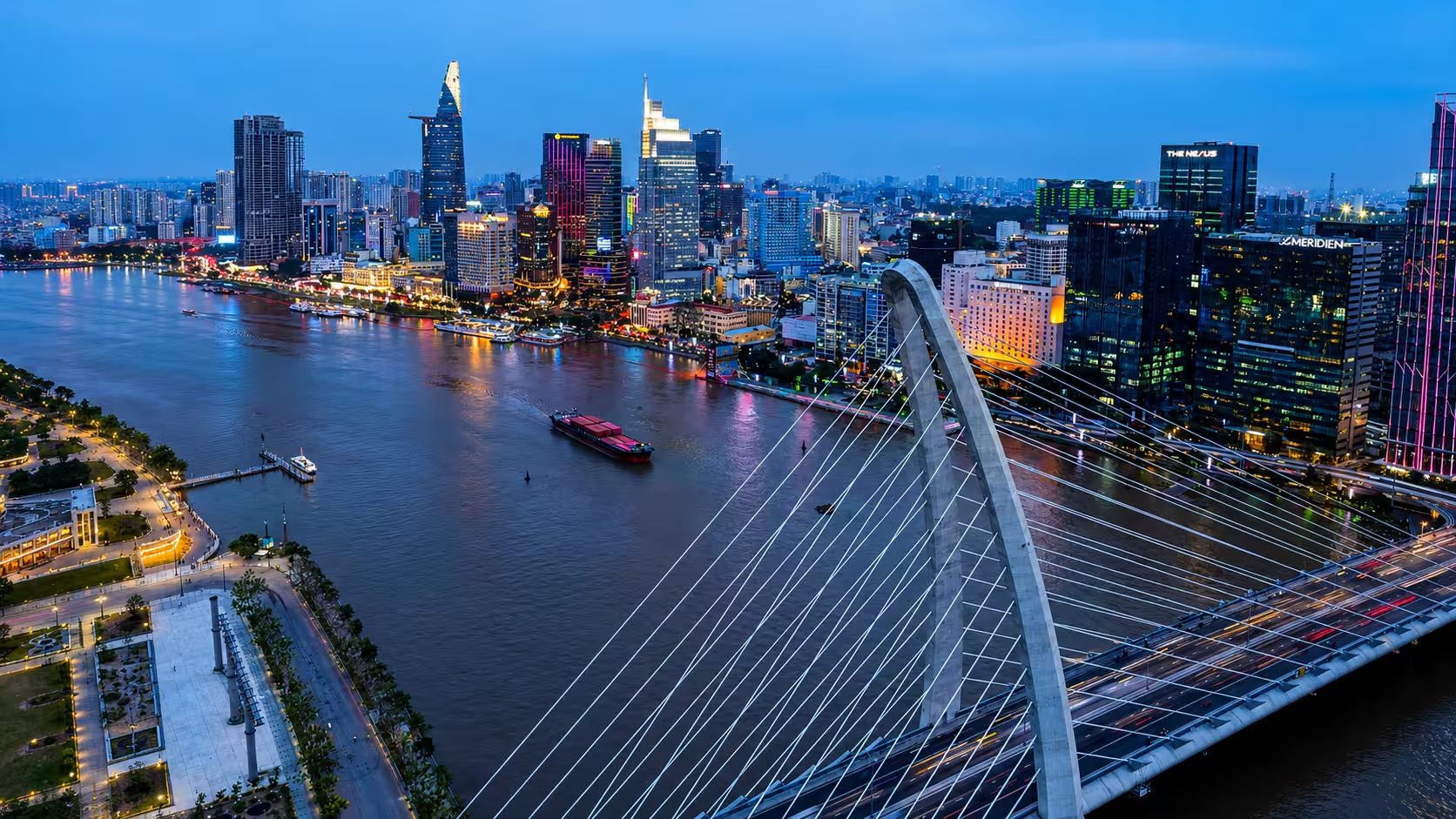
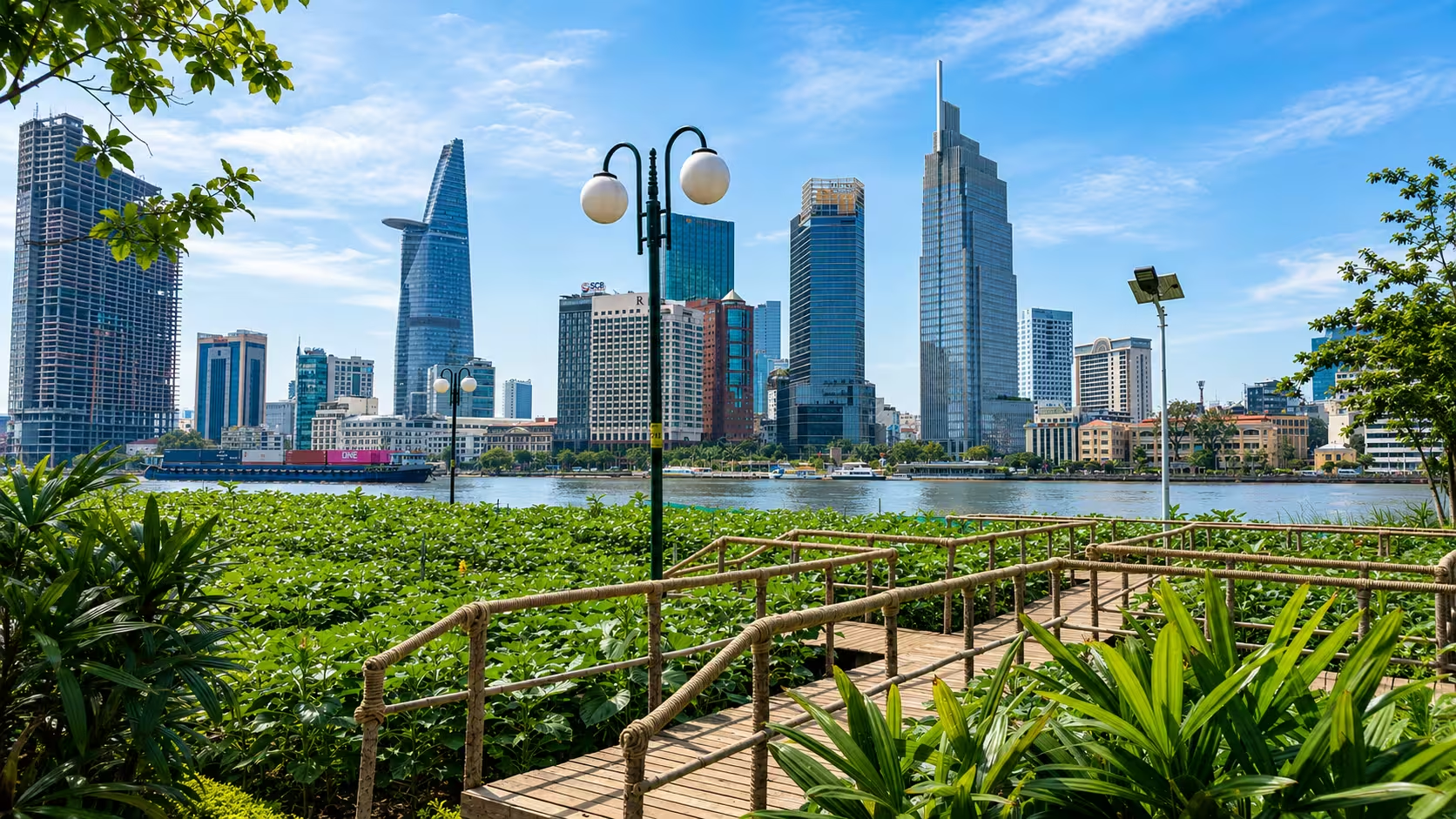
It is the country's financial centre, its busiest commercial port, its largest concentration of foreign direct investment, and the place where Vietnam's three decades of rapid economic growth are most visible in physical form: glass-clad office towers rising beside French colonial villas, motorbikes streaming past five-star hotels, and construction cranes dotting a skyline that has been almost entirely rebuilt within a single generation.
With a population of over 9.3 million people, Ho Chi Minh City is Vietnam's largest city by a wide margin and the undisputed centre of gravity for the country's economy.
It is home to the headquarters of the majority of Vietnam's largest domestic conglomerates, the regional offices of most multinational corporations operating in the country, and a startup and technology scene that has grown rapidly enough to earn comparisons to other fast-emerging Southeast Asian tech hubs.
For investors, professionals, and families weighing where in Vietnam to put down roots — or simply put capital to work — Ho Chi Minh City is usually the starting point of the conversation, and frequently the end point of the decision.
This guide takes a closer look at what makes the city tick: its history and identity, its climate and daily rhythms, the character of its many districts, the structure of its property market, its transport and infrastructure pipeline, its schools and healthcare system, and the practical considerations that matter most to anyone thinking about buying, renting, or relocating here.
From Saigon to Ho Chi Minh City: A Brief History
The city's layered identity — equal parts old Saigon and new Ho Chi Minh City — is not just branding. It reflects genuinely distinct historical chapters that locals still reference in daily life. Long before European contact, the area was a Khmer settlement known as Prey Nokor, gradually absorbed into Vietnamese territory by the 17th and 18th centuries.
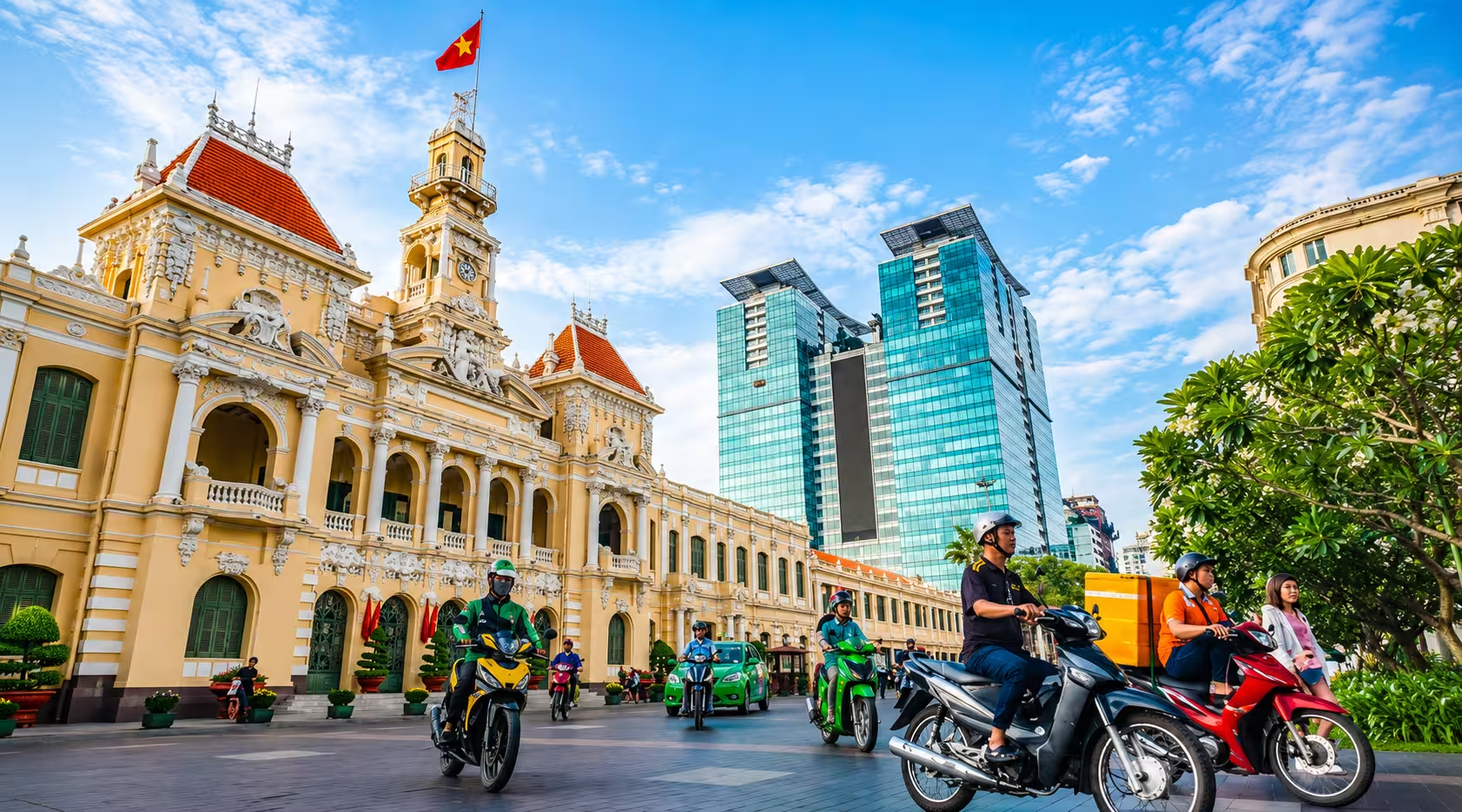
Under French colonial rule beginning in the 1860s, the city was redeveloped into "the Paris of the Orient," with wide boulevards, grand civic buildings, a opera house, a central post office, and a cathedral — much of which still stands today in District 1 and continues to define the visual character of the city centre.
Following reunification in 1975, the city was renamed Ho Chi Minh City in honour of Vietnam's revolutionary leader, though the name "Saigon" never disappeared from everyday use — it remains the name of the central train station, countless businesses, the river that runs through the city, and the way most residents refer to the urban core in casual conversation.
The economic reforms of the late 1980s known as Doi Moi transformed the city from a war-recovering economy into the engine of Vietnam's market liberalisation, and the pace of transformation since then — particularly over the past fifteen years — has been extraordinary.
Many residents who grew up in a city of low-rise shophouses and quiet riverside neighbourhoods now live alongside 50-storey towers and an entirely new financial district that didn't exist a decade ago.
Economic Profile: Vietnam's Growth Engine
Ho Chi Minh City generates the largest share of Vietnam's GDP of any single city in the country, despite occupying a relatively small fraction of its land area and population.
The local economy is built on a diversified base: finance and banking headquartered along Nguyen Hue and Dong Khoi streets in District 1; manufacturing-adjacent logistics and trade flowing through the city's port system; a fast-growing technology and startup sector clustered in coworking hubs across District 1, District 3, and Binh Thanh; and an enormous services, retail, and hospitality sector serving both the local population and the millions
of domestic and international visitors who pass through each year.
The city's economic dynamism is part of what distinguishes its property market from Hanoi's.
Where Hanoi's growth is closely tied to government policy, state institutions, and a steadier, more bureaucratic pace of expansion, Ho Chi Minh City's growth is driven by private enterprise, trade, and a more entrepreneurial culture — locals often describe the rivalry between the two cities in the same terms used to compare New York and Washington, D.C.: one is the seat of political power, the other is where the money actually moves.
That commercial energy translates directly into property demand, as a constant inflow of domestic migrants, returning overseas Vietnamese, and international professionals all compete for housing near the city's commercial centres.
Climate: Consistently Warm, Two Seasons, Year-Round Liveability
Ho Chi Minh City sits firmly within the tropics, and its climate ranges from roughly 25°C to 35°C year-round, without the dramatic seasonal swings found in Hanoi or northern Vietnam.
Rather than four seasons, the city experiences two broad patterns: a dry season running roughly from December through April, characterised by lower humidity, blue skies, and comfortable evenings, and a wet season from May through November, marked not by prolonged storms but by short, intense afternoon downpours that typically clear within an hour, after which the city carries on as normal.
For residents, this consistency is one of the city's most underrated advantages. There is no need to plan a wardrobe around a cold winter, no off-season for outdoor dining or rooftop bars, and no real disruption to daily commercial activity from weather. Street-level commerce, open-air markets, and al fresco dining operate on the same rhythm in January as they do in July.
The trade-off is humidity — visitors from temperate climates often need a week or two to adjust — and the wet-season downpours, while brief, can cause localised flooding in low-lying districts, a factor that increasingly informs both infrastructure planning and property buyers' due diligence in certain neighbourhoods.
District by District: A City of Distinct Identities
Few cities in Southeast Asia offer the sheer range of urban character packed into a single metropolitan area the way Ho Chi Minh City does. Spreading out from its historic centre, the city is organised into more than twenty districts (and several satellite towns), each with a genuinely different feel, price point, and tenant profile. Understanding these differences is essential to understanding the property market itself.
District 1 is the city's historic and commercial heart, and remains its most prestigious address. Centred on Nguyen Hue walking street, Dong Khoi, and the area around the Saigon Opera House and Notre-Dame Cathedral, District 1 combines colonial-era landmarks with the city's tallest and most expensive residential towers, luxury hotels, embassies, and premium retail.
Apartments here command the city's highest rents and sale prices, sustained by an enduring pool of senior corporate executives, diplomats, and affluent locals who prioritise being at the centre of everything over space or value.
Thu Duc City, which absorbed the former District 2 and District 9 in a 2021 administrative restructuring, has become the single most significant growth story in the city's property market over the past decade.
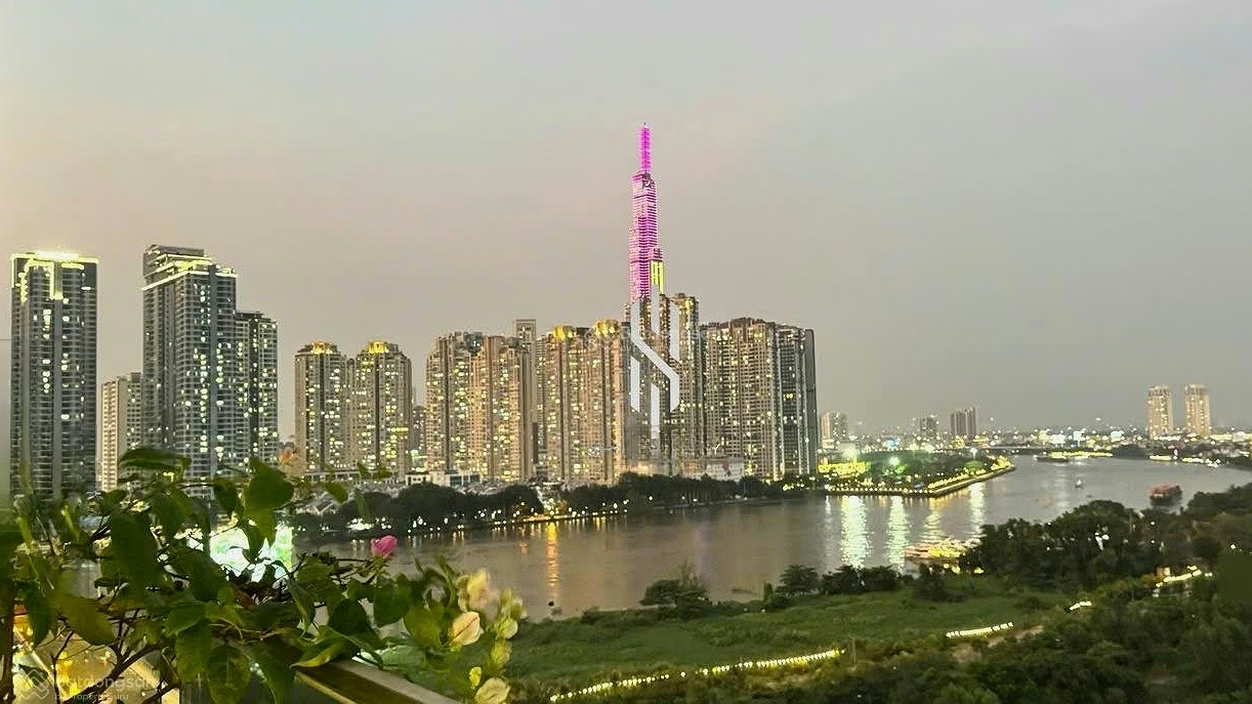
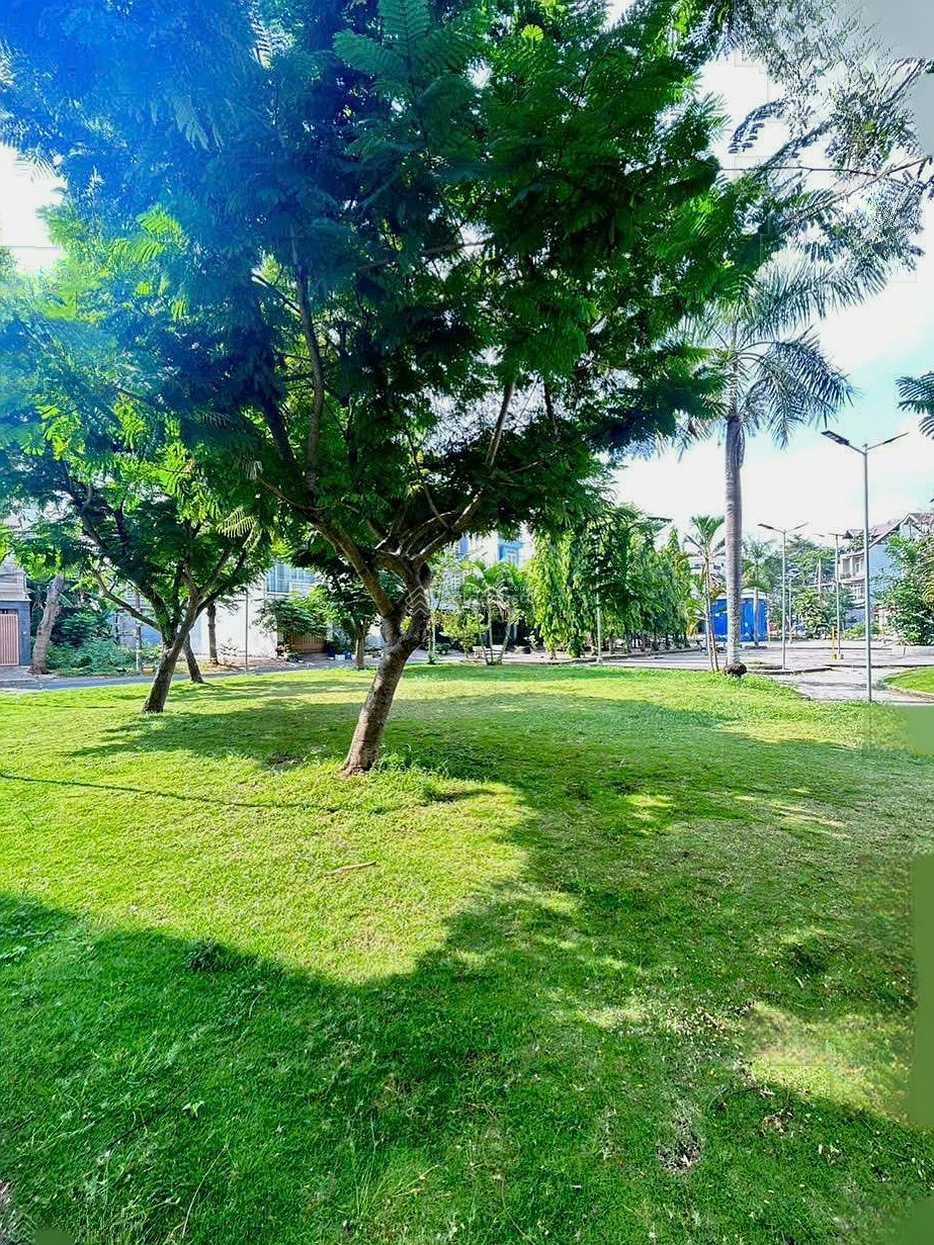
What was once considered a quieter, semi-suburban alternative to District 1 has been reimagined as a planned innovation and urban district, anchored by master-planned communities, international schools, tech and education campuses, and riverside green space along the Saigon River.
The area's combination of more modern infrastructure, lower density, and a large and growing expat population has made it a magnet for both end-users and investors, often at a meaningfully lower price point than equivalent District 1 product — though that gap has been narrowing as the area matures and as Metro Line 1, which runs directly through it, increases its accessibility.
District 3, immediately adjacent to District 1, offers a quieter, leafier residential alternative with a strong concentration of French colonial villas, boutique cafés, and mid-rise apartments — popular with long-term expats and locals who want central-city convenience without District 1's density and price premium.
District 4, a small peninsula just south of District 1 across the Ben Nghe Canal, has undergone significant redevelopment in recent years, transforming from a historically rougher, working-class area into a destination for new mid- and high-rise residential towers benefiting from river views and proximity to the centre at comparatively accessible prices.
District 5, historically known as Cho Lon ("Big Market"), is the heart of the city's large ethnic Chinese community and one of its oldest commercial districts, known for traditional shophouses, wholesale trade, and some of the city's most historic temples and markets. It offers a distinct cultural character and increasingly attracts buyers interested in heritage properties and renovation opportunities.
District 7, and particularly its Phu My Hung (Saigon South) area, was one of the city's first large-scale planned urban developments, built from reclaimed marshland into a master-planned district modelled partly on Singapore's urban design.
It has become one of the most popular areas for expat families, thanks to wide tree-lined streets, international schools, shopping centres, and a more orderly, lower-density urban layout than much of the rest of the city.
Binh Thanh, just north of District 1 across the Saigon River, has transformed rapidly in recent years from a primarily residential, lower-rise district into a hub of new high-rise development, much of it riverside, benefiting from proximity to the city centre at a meaningful discount to District 1 pricing.
Tan Binh and Go Vap offer dense, predominantly local residential markets close to Tan Son Nhat Airport, popular with middle-income local families and increasingly attracting investors targeting more affordable entry points with solid long-term owner-occupier demand.
Binh Tan, Binh Chanh, Nha Be, Hoc Mon, and Cu Chi make up the city's expanding outer ring, where land is more abundant and significantly cheaper, supporting the development of larger residential communities, townhouse projects, and industrial and logistics facilities.
These areas trade central-city convenience for affordability and, in many cases, the prospect of stronger capital appreciation as infrastructure — particularly new ring roads and planned metro extensions — gradually improves connectivity to the urban core.
The Property Market: Types, Pricing, and Ownership Structure
Ho Chi Minh City's property market spans an unusually wide range of product types, price points, and buyer profiles, which is part of what makes it accessible to such a broad spectrum of investors.
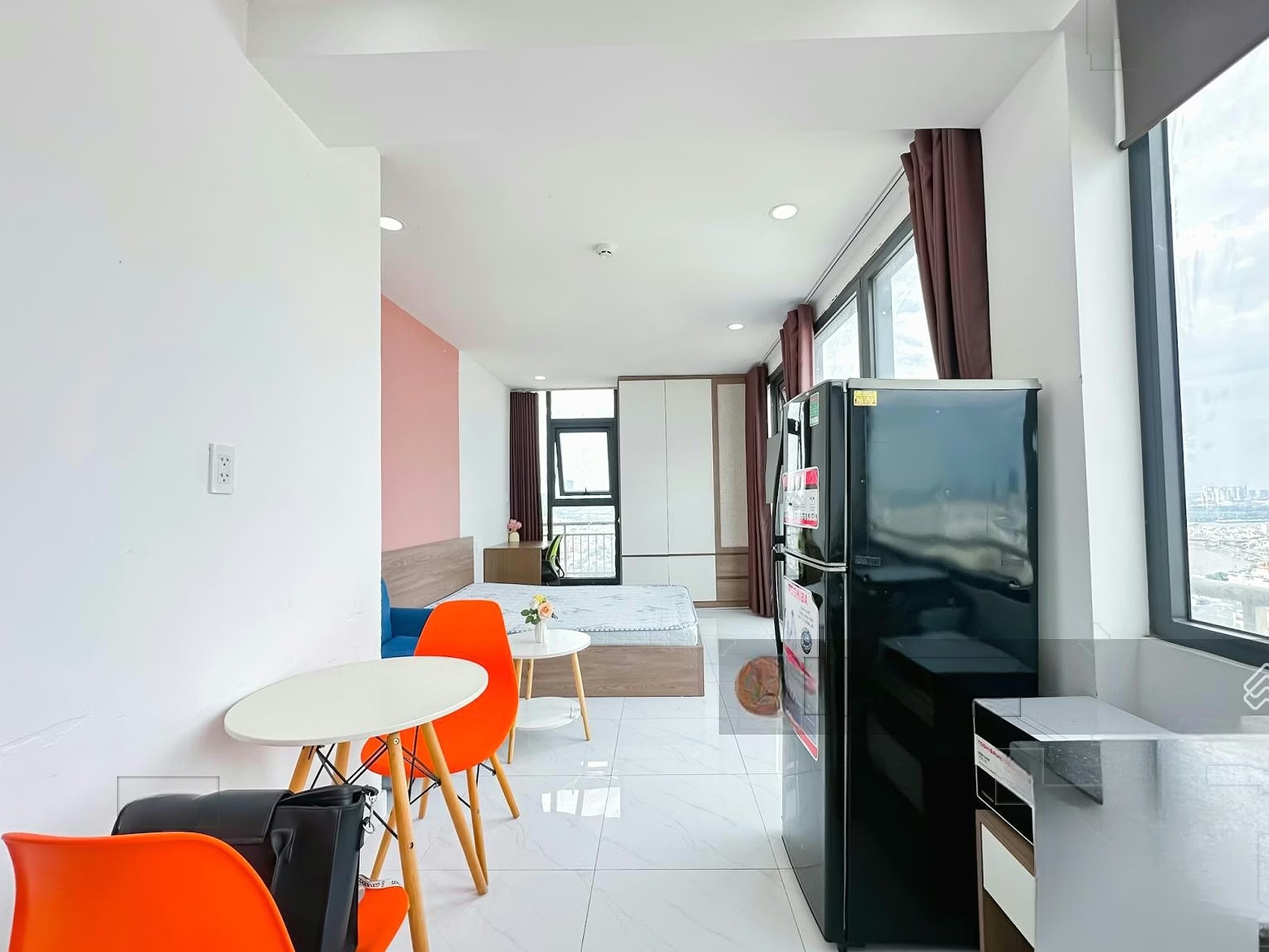
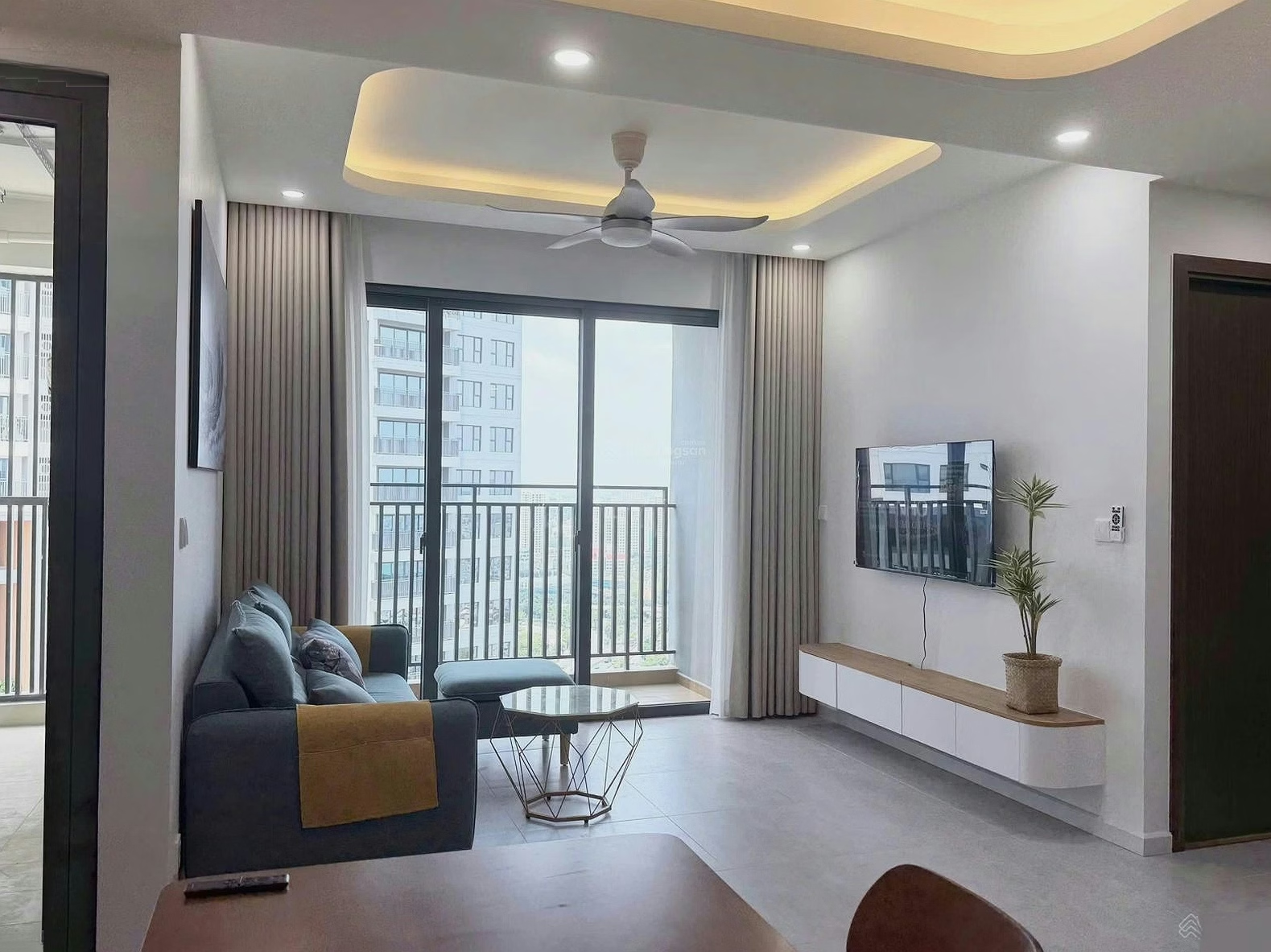
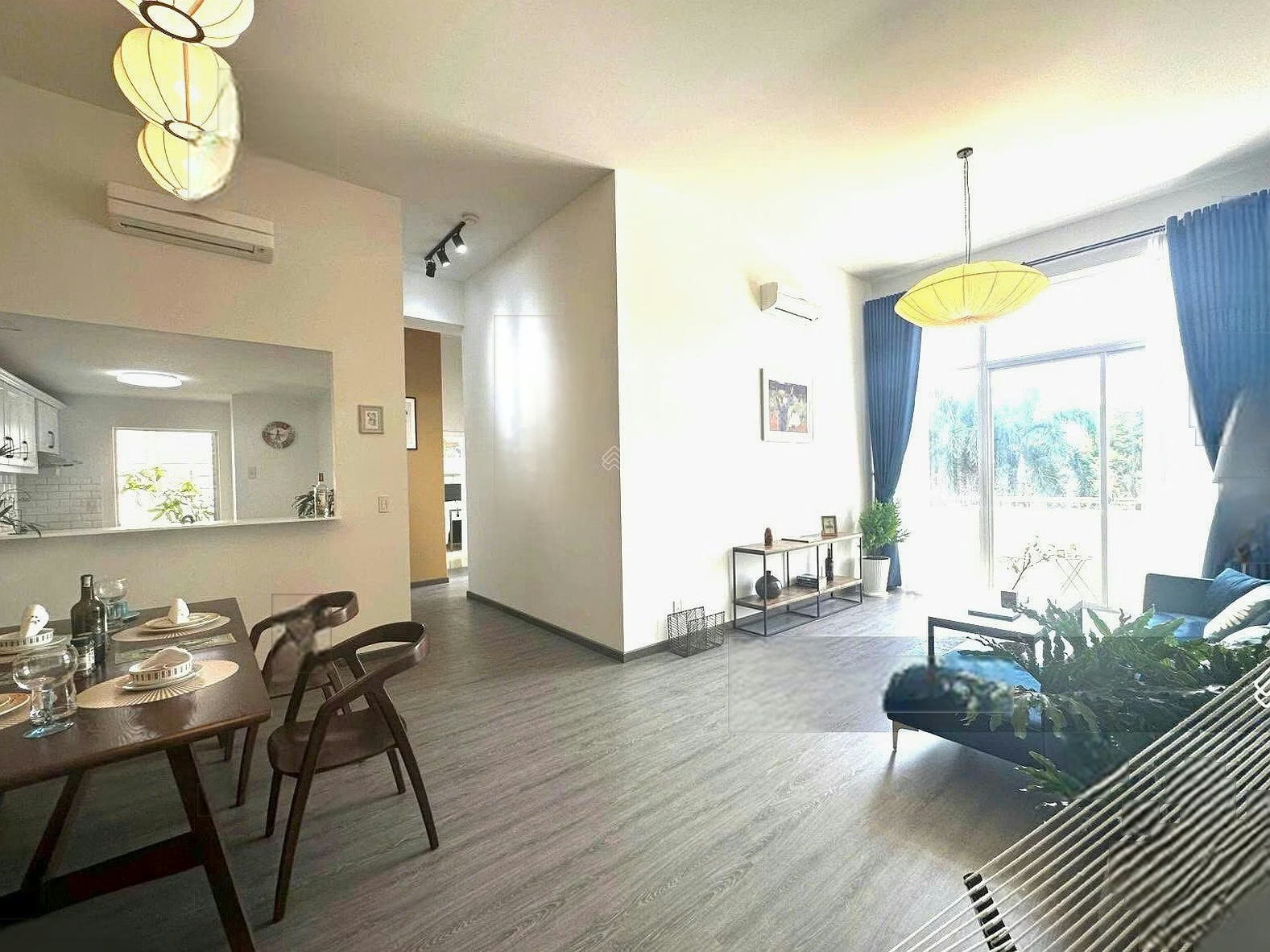
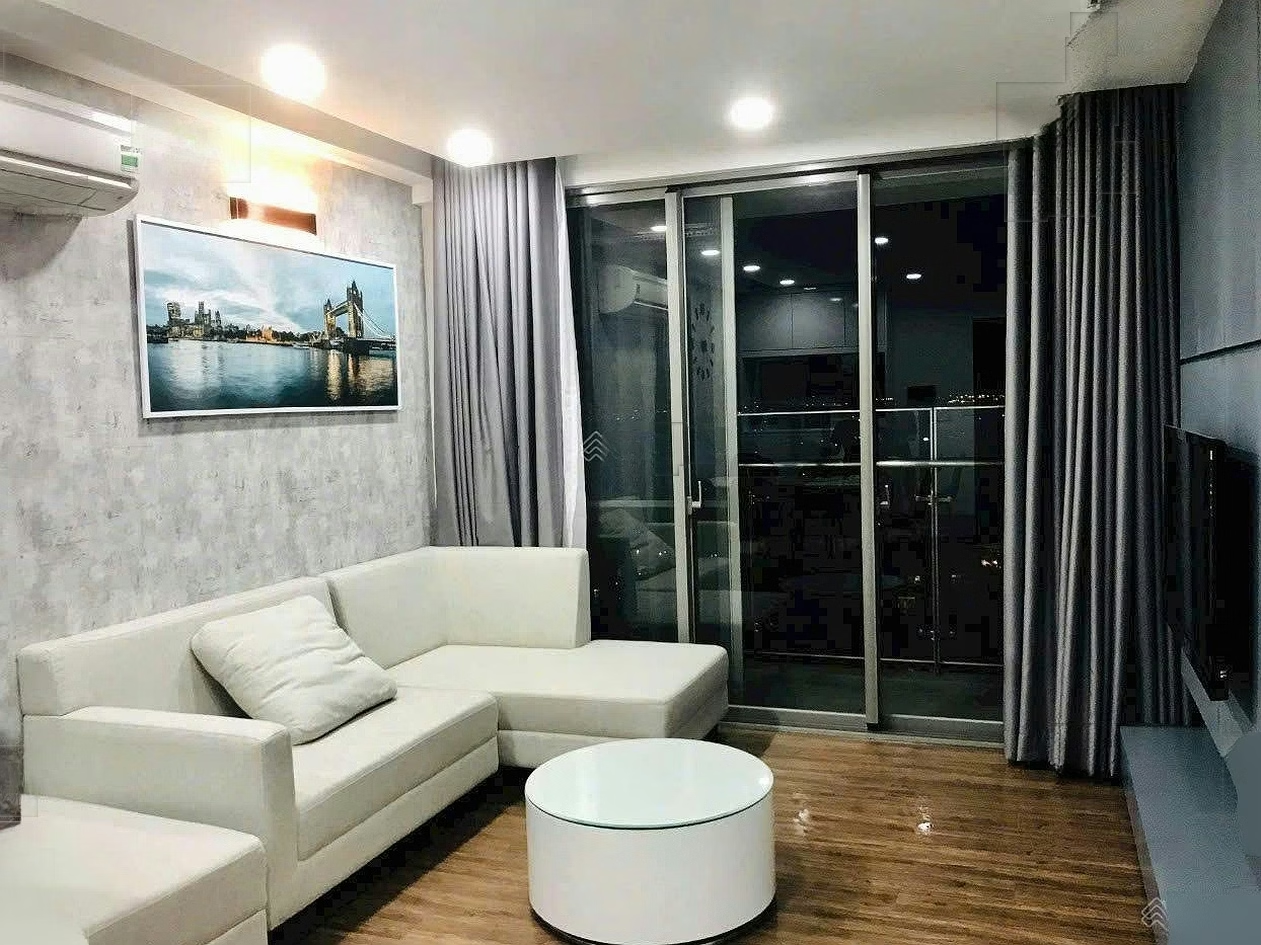
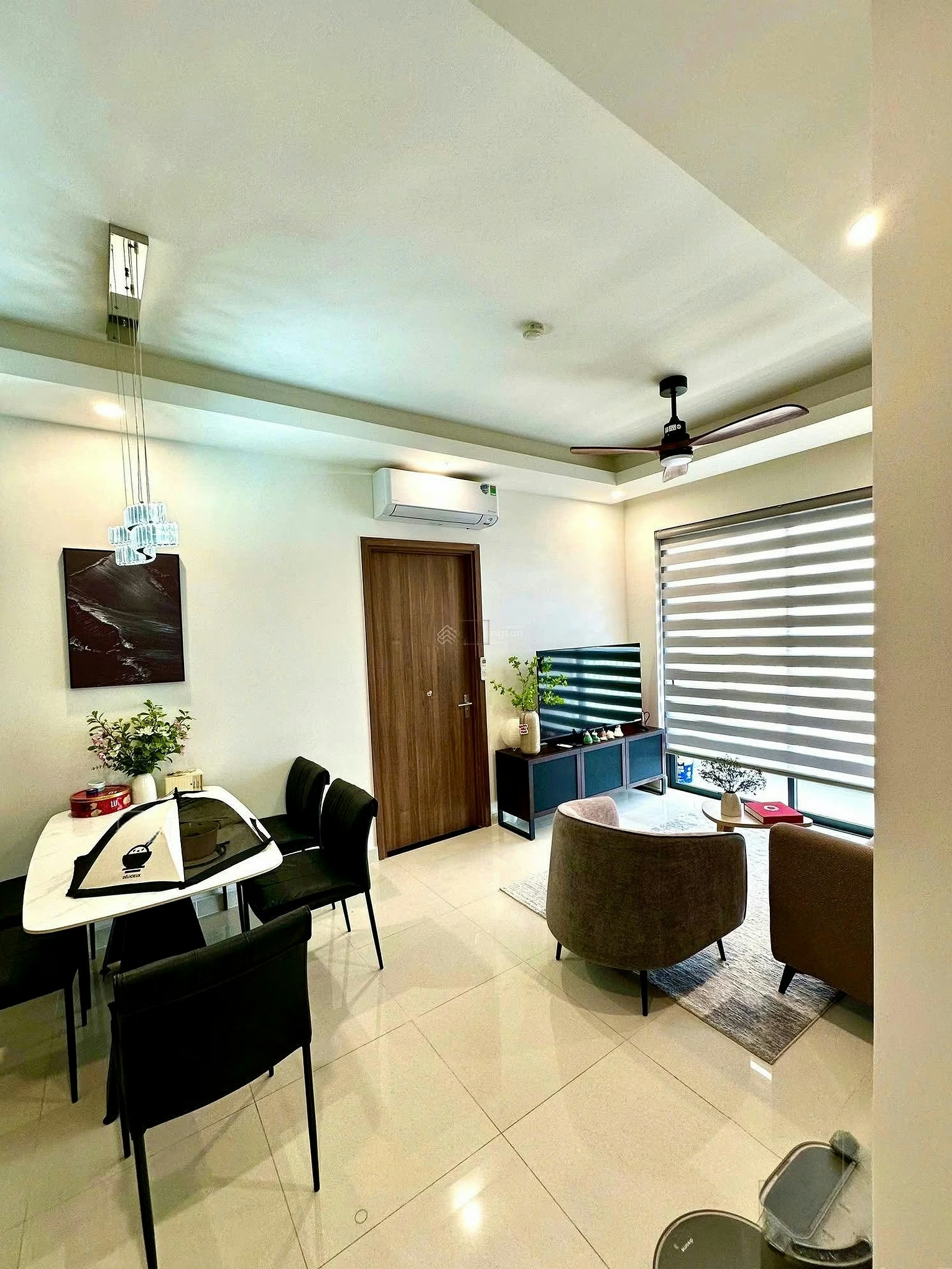
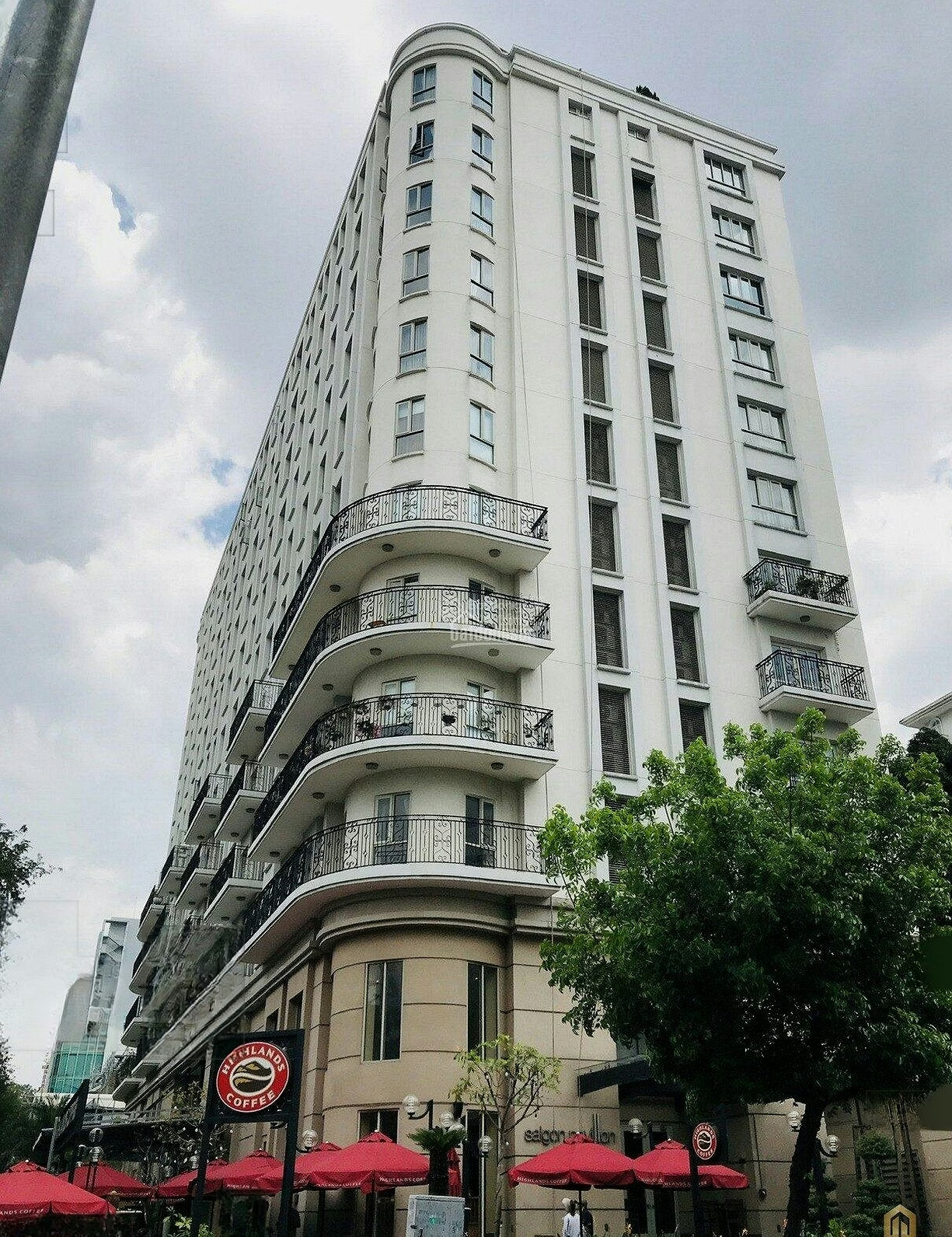
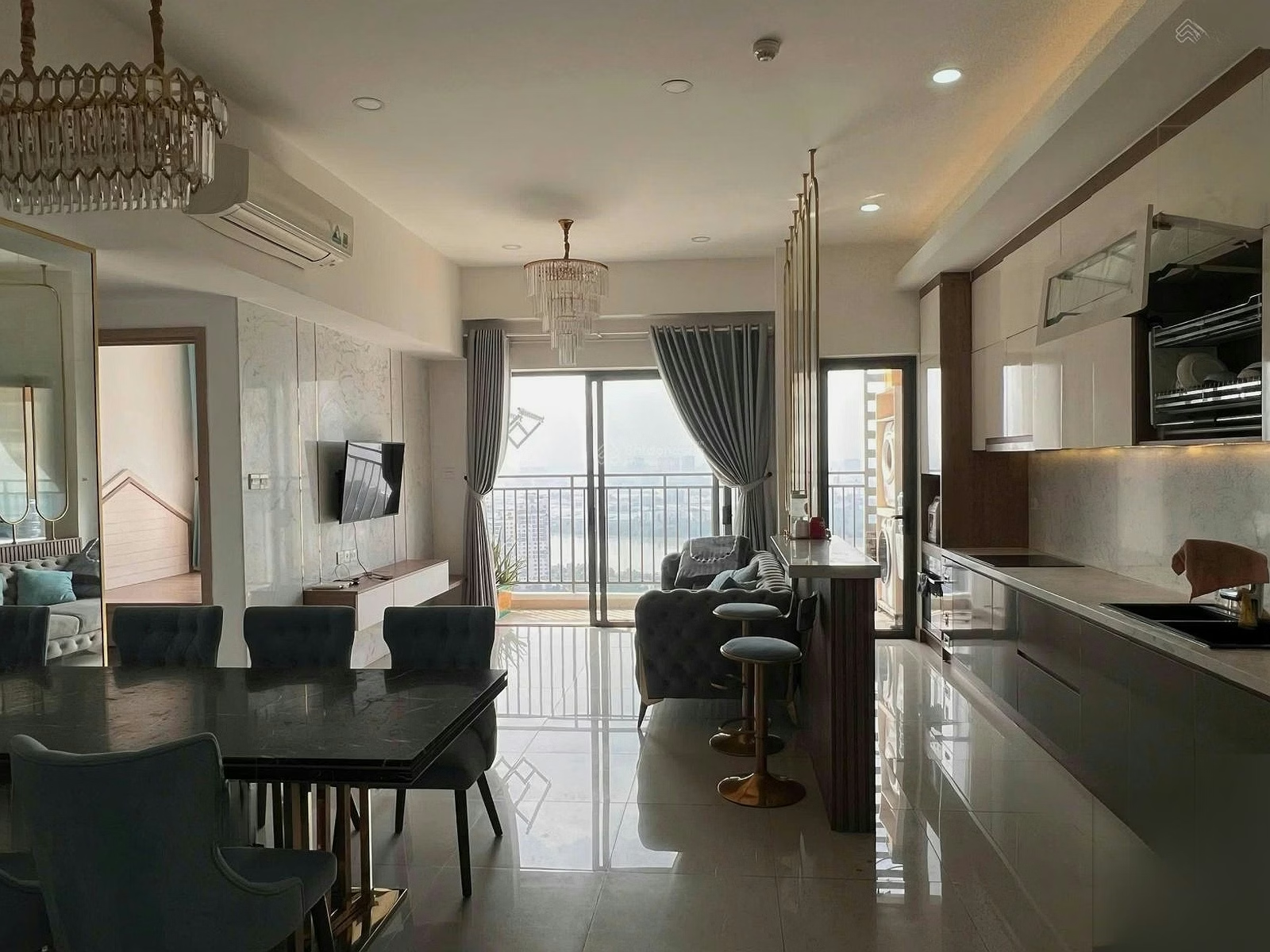
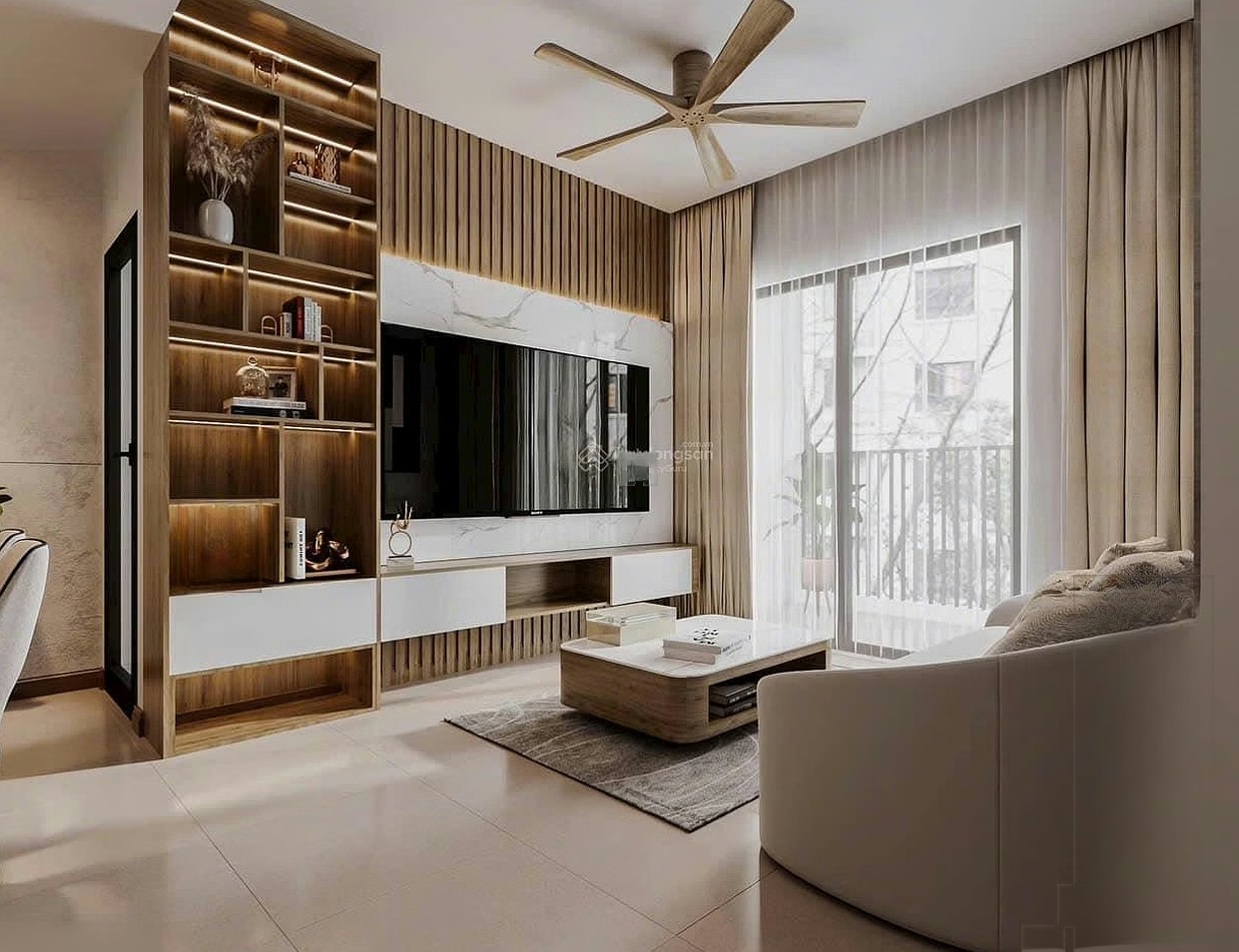
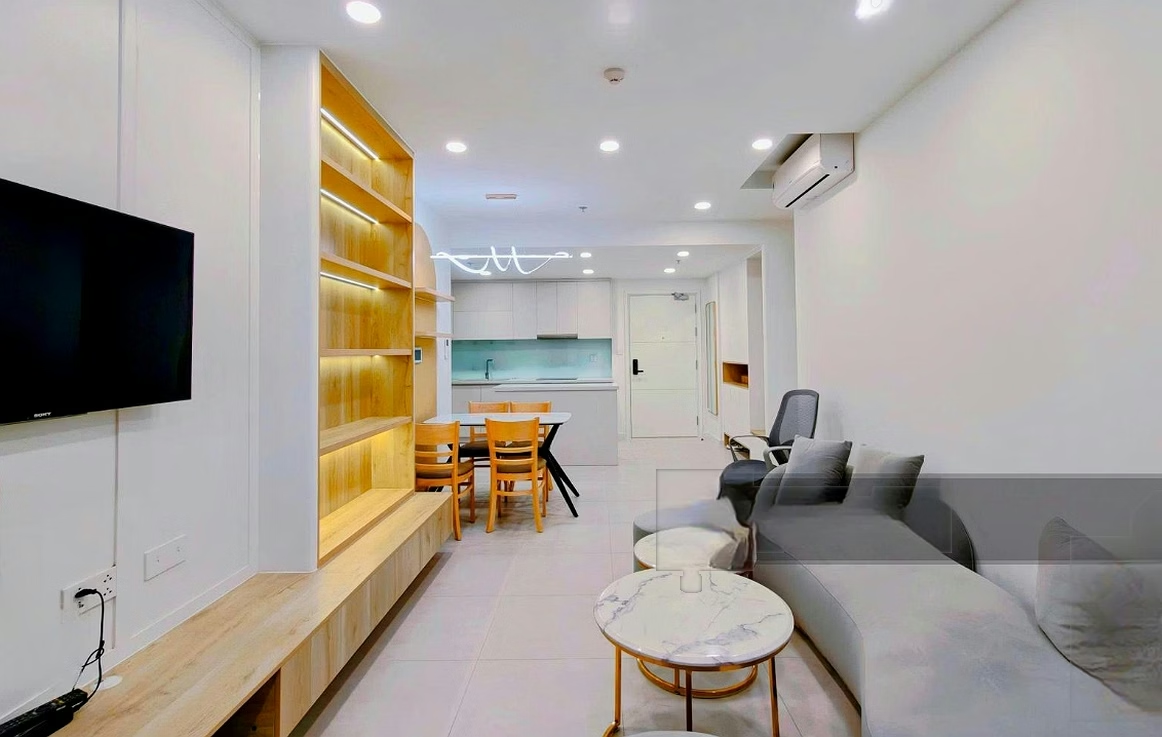
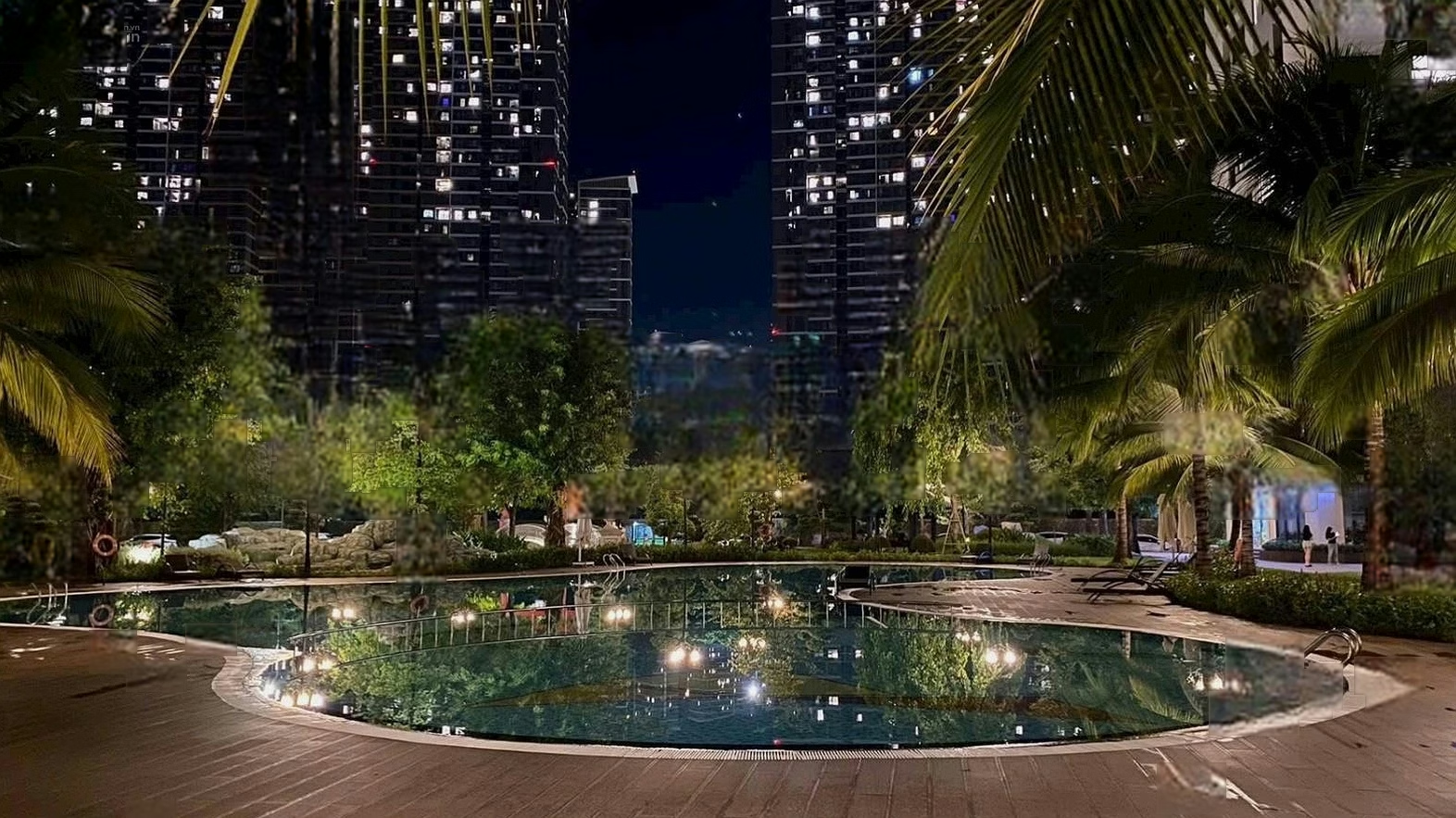
High-rise apartments and condominiums make up the bulk of the modern residential market and the segment most accessible to foreign buyers. These range from mass-market developments in outer districts to ultra-luxury branded residences in District 1 and Thu Duc City, often developed by major domestic players in partnership with international hotel and lifestyle brands.
Villas and townhouses are concentrated in planned communities such as Phu My Hung, parts of Thu Duc City, and gated developments in the outer districts, appealing to wealthier local families and some foreign residents who prioritise space and privacy over central-city proximity.
Shophouses and mixed-use properties, common throughout the older districts, combine ground-floor commercial space with residential floors above, and remain a popular structure for local business owners and investors targeting rental income from small retail or F&B tenants.
Land plots, particularly in the outer districts and surrounding provinces, attract longer-term investors betting on the city's continued geographic expansion, though land transactions for foreign buyers are subject to significant restrictions under Vietnamese law.
On the question of foreign ownership, Vietnam's legal framework allows foreign individuals and entities to purchase apartments in eligible residential developments, generally under a leasehold-style structure with terms typically running 50 years and renewable, subject to a cap on the proportion of units in any given building that may be foreign-owned.
Foreign ownership of landed property (houses with attached land title) is considerably more restricted.
These rules have evolved over the past decade and continue to be refined, so anyone considering a purchase should treat this summary as a general orientation rather than definitive legal guidance, and work with a qualified Vietnamese real estate lawyer or licensed conveyancer to confirm current eligibility, paperwork, and project-specific approval status before committing capital.
Across the market as a whole, average prices currently sit in the 50–120 million VND per square metre range, a spread wide enough to accommodate everything from entry-level apartments in developing outer districts to premium branded residences in District 1 and Thu Duc City.
This breadth is one of the market's defining features compared to other major Southeast Asian cities, where the gap between entry-level and prime product is often narrower — in Ho Chi Minh City, an investor with a modest budget and one with significant capital to deploy can both find a credible entry point without leaving the city limits.
Rental Market and Yields: Who Is Renting, and Why
Average rental yields across the city run at roughly 4–6%, consistently among the strongest of Vietnam's major urban markets and notably ahead of many comparable cities elsewhere in the region. That strength is underpinned by genuinely diverse and durable rental demand from several distinct tenant pools.
The first is the city's large foreign workforce — executives, engineers, teachers, and entrepreneurs employed by the multinational corporations, manufacturing operations, and international schools that have made Ho Chi Minh City their regional base. This group typically rents in District 1, Thu Duc City, and District 7, and tends to prioritise quality, amenities, and proximity to international schools over price.
The second is a fast-growing population of young, urban Vietnamese professionals, a demographic shift that has become increasingly important to the rental market over the past decade.
Where previous generations typically aimed to buy property as early as possible, a growing share of Ho Chi Minh City's young professionals — particularly those working in technology, finance, and multinational corporate roles — now rent for longer in their twenties and early thirties, prioritising flexibility and location over early ownership, a pattern familiar from other rapidly urbanising Asian cities.
The third is a steady flow of domestic migrants from across southern and central Vietnam, drawn to the city's job market and willing to rent more modest accommodation in the outer districts while building toward eventual ownership — a demand base that supports the more affordable end of the rental market even as the premium segment serves corporate and expat tenants.
Infrastructure and Transportation: A City Catching Up With Its Own Growth
Few factors matter more to Ho Chi Minh City's long-term property outlook than its transport infrastructure, and the picture here has changed meaningfully in the past two years.
Metro Line 1, connecting Ben Thanh Market in District 1 to Suoi Tien in Thu Duc City across 19.7 kilometres and 14 stations, opened to the public in December 2024 after more than a decade of construction, and has since carried tens of millions of passengers — a genuine milestone for a city long defined by motorbike-dominated streets and chronic traffic congestion.
The line runs directly through several of the districts most relevant to property investors, including District 1 and Thu Duc City, and has already begun to influence how buyers and tenants think about proximity to stations along the route.
Building on that momentum, Metro Line 2, connecting Ben Thanh to Tham Luong, is currently under construction, with the city government accelerating plans to bring several additional lines into simultaneous construction in the years ahead as part of a broader target to operate roughly 200 kilometres of urban rail by 2030.
While large infrastructure projects in Vietnam have historically taken longer than initial timelines suggest, the successful opening of Line 1 has shifted the conversation from "if" to "when" for the rest of the network, and investors increasingly factor planned station locations into their district-level decisions.
Air connectivity is also entering a new phase. Tan Son Nhat International Airport, located just a short drive from District 1, has long been one of the busiest and most centrally located airports in Southeast Asia, a major convenience for the corporate travellers and tenants who make up a large share of the city's premium rental market.
However, Tan Son Nhat has also been operating near or beyond its designed capacity for years, which is precisely the problem the new Long Thanh International Airport, roughly 40 kilometres from the city centre in neighbouring Dong Nai province, has been built to solve.
The airport received its first commercial flight in December 2025, and as of mid-2026 is in its final construction push toward full operations, with officials targeting synchronised commercial service later in the year.
Once fully operational, Long Thanh is designed to handle a substantial share of the region's international traffic, and its development is expected to support new transport corridors and economic activity across the eastern approach to the city — an area that includes parts of Thu Duc City and Dong Nai province increasingly being watched by investors positioning ahead of the airport's full opening.
Education: One of Vietnam's Deepest International School Markets
Ho Chi Minh City is home to more than 30 international schools, covering British, American, Australian, French, German, Japanese, Korean, Singaporean, and International Baccalaureate curricula, among the deepest and most diverse concentrations of international education options found anywhere in Vietnam.
Many of the city's most established international schools are clustered in District 2/Thu Duc City and District 7, which is a major reason both areas have become the default choice for relocating expat families.
This educational infrastructure is not incidental to the property market — it directly shapes rental demand patterns, with family-sized apartments and villas near top international schools consistently commanding premium rents from corporate-sponsored tenants whose housing allowances are often benchmarked against school proximity.
Healthcare: A Growing Private Sector
Alongside its public hospital system, Ho Chi Minh City has developed a substantial private and international-standard healthcare sector over the past decade, including hospitals and clinics affiliated with regional and international healthcare groups, particularly concentrated in District 1, District 2/Thu Duc City, and District 7.
For expat residents and increasingly for affluent local families, access to international-standard healthcare is a meaningful factor in choosing where to live, reinforcing the existing pull toward the same districts already favoured for schooling and lifestyle.
Food, Culture, and Daily Life
Ho Chi Minh City's food scene reflects its character as Vietnam's most cosmopolitan city.
Alongside classic southern Vietnamese dishes — com tam (broken rice), the southern style of pho, banh xeo, and an enormous and ever-present street food culture built around plastic stools and roadside stalls — the city hosts an extraordinarily diverse international dining scene: Japanese izakayas and ramen shops, Korean barbecue, French bistros, Western brunch spots, and a genuinely sophisticated craft cocktail, wine bar, and specialty coffee
culture, much of it concentrated in District 1, District 2/Thu Duc City, and District 7.
Daily life in the city moves at a different pace than Hanoi's. Mornings start early, with street vendors and coffee shops opening well before sunrise; afternoons can be interrupted by sudden rain during the wet season; and evenings stretch late, particularly around the bar and nightlife districts of District 1 and the riverside venues of Thu Duc City.
The overall rhythm is faster, louder, and more commercially driven than the capital — residents often describe Saigon as a city that rewards hustle and ambition, in contrast to Hanoi's more measured, institutional pace.
The Expat Community: Large, Established, and Growing
Ho Chi Minh City's expat community is one of the largest and most established in Vietnam, spanning corporate professionals on multi-year postings, entrepreneurs running their own businesses, teachers at the city's many international schools, and a significant population of long-term residents who arrived years ago and simply never left.
The community is concentrated in District 1, District 2/Thu Duc City, and District 7's Phu My Hung area, each offering a slightly different flavour: District 1 for those who want to be in the centre of the action, Thu Duc City for those prioritising space, greenery, and a quieter international community, and Phu My Hung for families seeking an orderly, suburban-style environment built specifically around international schooling and amenities.
Future Development and Growth Drivers
Several structural trends point toward continued momentum in Ho Chi Minh City's property market over the coming years. The expansion of the metro network, even on a longer timeline than originally planned, is likely to keep unlocking value in districts that gain new stations, much as Line 1 has already begun to do along its route through Thu Duc City.
The full commercial opening of Long Thanh International Airport is expected to meaningfully ease congestion at Tan Son Nhat while opening up new development corridors to the east of the city.
Continued foreign direct investment, a maturing technology and startup sector, and a young, increasingly affluent population all point toward sustained housing demand, particularly in the mid-to-premium segment favoured by both local professionals and the international community.
At the same time, the city's outer districts continue to absorb population growth that the historic centre simply cannot accommodate, supporting a long runway of development in areas that remain comparatively affordable today.
Risks and Considerations for Investors
No market is without risk, and Ho Chi Minh City has its own set of considerations worth weighing carefully. Large infrastructure projects in Vietnam have a track record of running behind initial schedules, so investors should treat announced completion dates for transit and airport projects as directional rather than guaranteed.
Flooding remains a periodic issue in some low-lying districts during the wet season, a factor worth investigating at the building and street level rather than assuming applies uniformly across the city. Foreign ownership regulations, while well-established for apartments, carry specific conditions and caps that vary by project and can change over time, making professional legal advice essential before any purchase.
And as with any market that has experienced rapid price appreciation in certain segments, buyers should be careful to distinguish between areas with genuine, infrastructure-backed long-term demand and developments priced primarily on speculative momentum.
None of this is intended as financial or legal advice — only as a starting point for the kind of due diligence any serious investor should expect to undertake with qualified local professionals.
How Ho Chi Minh City Compares to Vietnam's Other Major Markets
Investors weighing Ho Chi Minh City against Vietnam's other major cities tend to frame the decision around a handful of trade-offs.
Against Hanoi, the calculation usually comes down to entry price versus yield and liquidity: the capital offers lower average prices per square metre and a slower, steadier market, while Ho Chi Minh City trades a higher entry cost for stronger average rental yields, a deeper and more international tenant pool, and a more liquid resale market with a larger number of comparable transactions to benchmark against.
Against the coastal cities of Da Nang and Nha Trang, the contrast is more about strategy than price: the coastal markets are heavily shaped by tourism and short-term rental demand tied to seasonal visitor flows, while Ho Chi Minh City's rental base is overwhelmingly driven by long-term residential and corporate tenants, making its income profile considerably steadier and less exposed to swings in international travel patterns.
This isn't to suggest one market is simply "better" than another — each suits a different investment objective. An investor chasing the highest possible yield on a smaller budget may find better numbers in an outer Hanoi district or a well-located coastal apartment.
An investor prioritising capital preservation, liquidity, and a tenant base insulated from tourism cycles will generally find Ho Chi Minh City's combination of scale and economic diversity more reassuring.
Many experienced Vietnam-focused investors end up holding positions in more than one city for exactly this reason, treating Ho Chi Minh City as the anchor of a portfolio and using the other markets to diversify income sources and capture different growth stories.
What the Buying Process Typically Involves
For anyone new to the Vietnamese market, it's worth understanding the broad shape of a typical purchase before getting into project-specific detail.
Buyers usually begin by confirming a project's legal status — specifically whether the development has the necessary approvals in place to sell units to foreign buyers and whether the foreign-ownership quota for that building has room remaining, since this cap is tracked per building rather than per city.
From there, the process generally involves a reservation or deposit agreement, a sale and purchase agreement setting out the payment schedule (often staged against construction milestones for off-plan purchases), and final registration of the ownership certificate once the building is completed and the unit is handed over.
Because rules around foreign ownership, payment structuring, and currency transfer have been refined multiple times over the past decade and can vary by project, the single most useful step any prospective buyer can take is engaging a licensed Vietnamese real estate lawyer or reputable conveyancing firm before signing anything or transferring funds.
A good local lawyer will confirm the project's current legal standing, review the sale contract for standard protections, and clarify the tax and repatriation rules that apply if the property is eventually resold or the income is sent abroad. This guide is intended to provide general orientation only, not legal or financial advice, and nothing here should be relied upon as a substitute for project-specific professional guidance.
Who Ho Chi Minh City Suits Best
Ho Chi Minh City is best suited to investors and residents who want exposure to Vietnam's largest, most liquid, and most diverse property market, supported by the country's deepest pool of rental demand, its most extensive international school and healthcare infrastructure, and an improving — if still developing — transport network.
It is a natural fit for corporate professionals relocating for work, families prioritising international education, and investors comfortable accepting central-district prices in exchange for stronger yields and greater long-term liquidity, as well as those seeking more affordable entry points in the city's rapidly developing outer districts.
Where Hanoi offers cultural depth and a lower-cost entry point, and Vietnam's coastal cities offer lifestyle and tourism-driven upside, Ho Chi Minh City's case rests on scale, commercial momentum, and its enduring role as the engine room of the Vietnamese economy — a position it has held for decades and shows no sign of relinquishing.
Ho Chi Minh City at a Glance
Metric
Detail
Population
9.3 million
International Airport
Tan Son Nhat (plus newly opened Long Thanh, ramping toward full operations in 2026)
Avg. Price/m²
50–120M VND
Rental Yield
4–6% avg
International Schools
30+ schools
Climate
Tropical, 25–35°C
Key Transit
Metro Line 1 (operational, Ben Thanh–Suoi Tien); Metro Line 2 under construction